

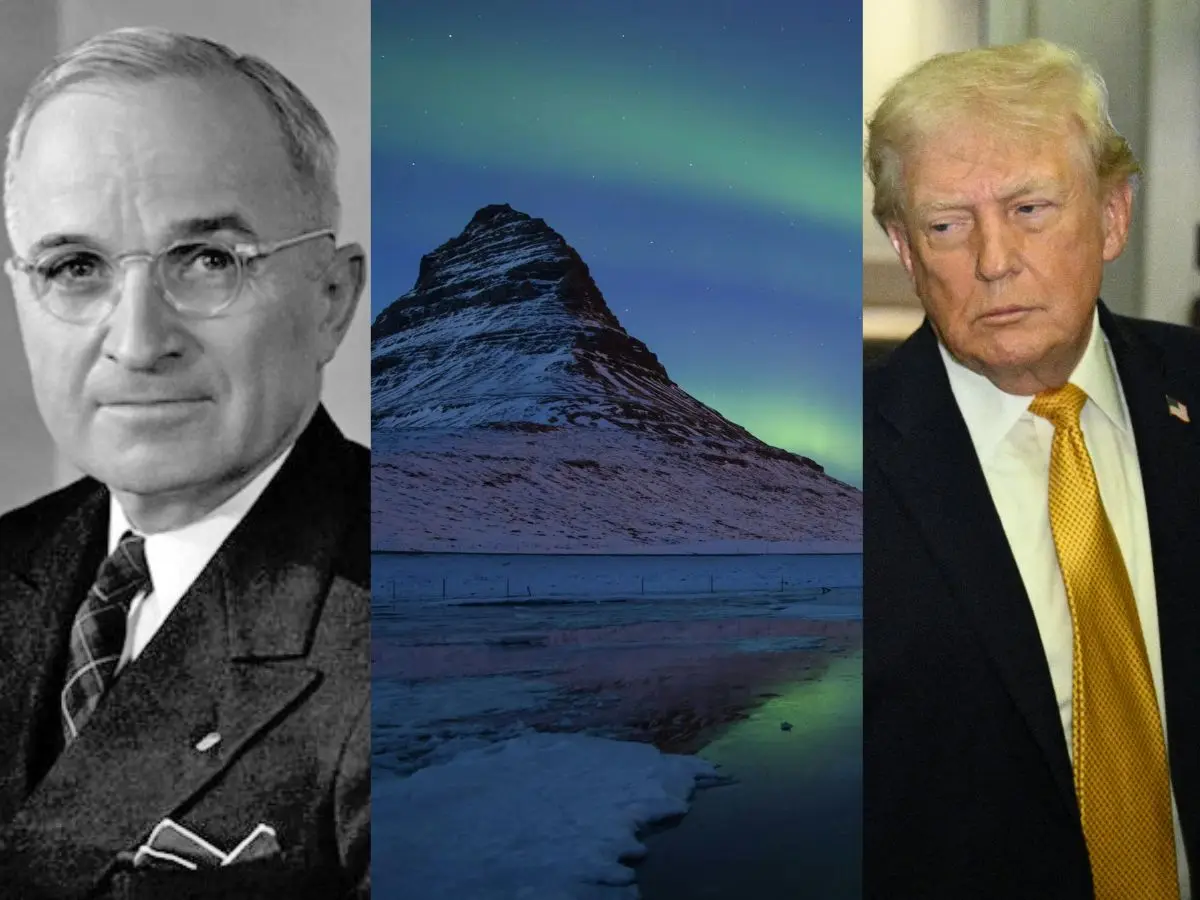
In August 2019, the world woke up to headlines that seemed torn from the pages of a satirical novel rather than the annals of international diplomacy. The President of the United States, Donald Trump, had reportedly expressed a serious interest in purchasing Greenland, the world’s largest island and an autonomous territory within the Kingdom of Denmark. What began as a leaked rumor quickly solidified into a confirmed geopolitical ambition, with the President comparing the potential acquisition to “a large real estate deal.”
While late-night comedians had a field day with the concept, the mood inside the chancelleries of Europe—and specifically within the Danish government—was far from amused. The proposal triggered an immediate and sharp diplomatic row between Washington and Copenhagen, two founding members of NATO and historically close allies. The incident transcended the absurdity of the initial headline to reveal deeper fractures within the transatlantic alliance.
It raised uncomfortable questions about sovereignty, the commodification of territories in the 21st century, and the shifting nature of American foreign policy. The Greenland bid was not merely a curious footnote in the Trump presidency; it was a stress test for NATO. It forced member states to grapple with a U.S. administration that viewed traditional alliances through a transactional lens, challenging the bedrock of mutual respect and shared values that had held the West together since the end of the Second World War.
The Proposal That Sparked the Firestorm
To understand the fallout, one must first look at the proposal itself. The idea did not emerge from a vacuum. Greenland sits at a critical strategic juncture between the Arctic and Atlantic oceans. As climate change accelerates the melting of polar ice, new shipping lanes are opening, and vast, previously inaccessible natural resources are becoming available.
U.S. Interest in Acquiring Greenland
Reports surfaced that President Trump had repeatedly discussed the purchase with top advisers, asking about the feasibility of such a move and even directing his White House counsel to explore the matter. The interest was driven by two primary factors: resources and security. Greenland is believed to hold immense deposits of rare earth minerals—critical components for modern technology, from smartphones to fighter jets—that are currently dominated by Chinese supply chains.
Strategic and Economic Motivations
From a military perspective, Greenland is vital. It houses the Thule Air Base, the U.S. Armed Forces’ northernmost installation. This base is essential for ballistic missile early warning systems and space surveillance. Acquiring the territory would have cemented American control over this strategic asset, removing the need to navigate lease agreements or diplomatic protocols with Denmark. Economically, the move was framed by the administration as a way to relieve Denmark of the “financial burden” of the annual subsidies it provides to the island, estimated at over $500 million.
Initial Public and Political Reactions
When the news broke, the reaction in Washington was mixed. Some Republican lawmakers defended the strategic logic, citing historical precedents of American territorial expansion. However, the broader political establishment viewed the move with skepticism, noting that the days of purchasing sovereign lands and their populations were long gone. The sheer bluntness of the proposal—treating a semi-autonomous territory and its people as assets on a balance sheet—set the stage for the diplomatic collision that followed.
Denmark’s Response and NATO Tensions
The reaction from Copenhagen was swift, unequivocal, and visibly agitated. Denmark has been one of America’s most reliable military partners, contributing troops to conflicts in Afghanistan, Iraq, and Libya. The suggestion that a part of its kingdom could be bought without prior consultation felt like a betrayal of that partnership.
Denmark’s Official Rejection
Danish Prime Minister Mette Frederiksen responded to the reports during a visit to Greenland, calling the discussion “absurd.” She clarified the stance of her government and the Greenlandic people in no uncertain terms: “Greenland is not for sale. Greenland is not Danish. Greenland belongs to Greenland.” Her comments were intended to shut down the speculation and reassure the Greenlandic population that their autonomy was respected by the mother country.
Statements Highlighting Alliance Strains
The exchange escalated when President Trump took offense at the Prime Minister’s use of the word “absurd,” calling her statement “nasty.” In a move that shocked diplomatic observers, he abruptly canceled a scheduled state visit to Denmark just two weeks before it was set to occur. This cancellation turned a theoretical disagreement into a concrete diplomatic rift. Former U.S. ambassadors to Denmark and NATO officials expressed dismay, noting that publicly shaming a loyal ally over a real estate dispute undermined the trust essential for collective defense.
How NATO Allies Perceived the Incident
For other NATO members, the incident was a wake-up call. It signaled that the U.S. administration was willing to leverage diplomatic norms and state visits as bargaining chips. If the U.S. could treat Denmark—a stable, low-maintenance ally—with such disregard, other smaller nations in the alliance began to wonder about their own standing. The incident reinforced fears that Article 5 (the commitment that an attack on one is an attack on all) might be viewed by Washington as conditional or transactional rather than ironclad.
Greenland’s Position in the Controversy
Often lost in the high-level shouting match between Washington and Copenhagen were the voices of the people most affected: the 56,000 residents of Greenland. The island has had home rule since 1979 and self-rule since 2009, meaning that while Denmark handles foreign affairs and defense, domestic issues are decided in Nuuk.
Statements from Greenlandic Leaders
Kim Kielsen, the premier of Greenland at the time, issued a brief but powerful statement: “We are open for business, but we are not for sale.” This sentiment was echoed by Aja Chemnitz Larsen, a Greenlandic lawmaker in the Danish parliament, who emphasized that Greenland’s future lies in equal partnerships, not in being a subject of acquisition.
Public Opinion Regarding Sovereignty
The proposal touched a nerve regarding the island’s colonial history. For decades, Greenland has worked toward greater independence from Denmark. The idea of being transferred from one colonial power to another, without the consent of the populace, was viewed as a regression. The conversation in Nuuk shifted rapidly from economic development to the protection of cultural identity and the right to self-determination.
Concerns Over Autonomy
While some in Greenland see the U.S. as a potential investor that could help the island achieve financial independence from Denmark, the “purchase” rhetoric soured the potential for goodwill. It framed the U.S. interest as predatory rather than cooperative. The incident unified Greenlandic politicians across the spectrum in defense of their autonomy, clarifying that any increased U.S. presence in the Arctic would need to be negotiated with Nuuk directly, not just Copenhagen.
NATO’s Role and the Alliance Under Pressure
The Greenland affair highlighted a specific vulnerability in NATO’s northern flank. The Arctic is becoming a theater of great power competition, and NATO’s unity in this region is paramount.
Why Greenland Matters Strategically
Control over the “GIUK gap” (Greenland-Iceland-United Kingdom) is essential for monitoring Russian naval activity in the North Atlantic. Thule Air Base is the cornerstone of this surveillance. If a rift were to grow between the U.S. and Denmark, it could complicate the operational freedom the U.S. military currently enjoys on the island. The alliance relies on seamless cooperation; political friction introduces friction in security protocols.
Testing Trust and Cohesion
Trust is the currency of any alliance. The cancellation of the state visit suggested that the U.S. prioritized its unilateral desires over the dignity of its partners. This forced NATO Secretary-General Jens Stoltenberg and other leaders to work overtime behind the scenes to smooth over the cracks. They had to reassure European capitals that the U.S. commitment to European security remained intact, even if the diplomatic rhetoric suggested otherwise.
Repercussions for Military Cooperation
Fortunately, military-to-military cooperation is often resilient enough to withstand political turbulence. Joint exercises and intelligence sharing continued despite the headlines. However, the incident served as a stark reminder that military interoperability relies on political will. Had the dispute escalated further, it could have delayed upgrades to radar installations or complicated negotiations regarding the U.S. presence in the Arctic, potentially leaving NATO blind spots in the far north.
Global Reaction and Geopolitical Implications
The world was watching. For adversaries of the West, the public spat between NATO allies was a propaganda victory.
Media Coverage and Diplomatic Commentary
International media largely portrayed the bid as a diplomatic blunder. European editorials questioned the stability of U.S. leadership. In Russia and China, state media used the incident to paint the United States as an imperialist power that viewed smaller nations as commodities. This narrative complicated American soft power efforts, making it harder to argue for a “rules-based international order” when the U.S. appeared to be ignoring the rules of sovereignty.
Responses from Arctic Stakeholders
China, which has dubbed itself a “near-Arctic state,” has been aggressively pursuing infrastructure projects in Greenland. The clumsy U.S. approach inadvertently made Chinese investment look more attractive to some, as Beijing frames its involvement as purely economic partnership (though Western analysts dispute this). Russia, which has been remilitarizing its Arctic coast, likely viewed the disarray in the NATO alliance as an opportunity to further assert its dominance in the region without facing a unified front.
Broader Foreign Policy Credibility
The incident damaged U.S. credibility regarding its “Free and Open Indo-Pacific” and Arctic strategies. By attempting to buy a territory rather than build a coalition, the U.S. risked alienating the very partners it needs to contain competitors like China. It demonstrated that a lack of diplomatic finesse can have tangible national security costs.
Historical Context: U.S., Denmark, and Greenland Relations
To be fair to the 2019 proposal, it was not the first time the United States tried to buy Greenland. History provides a precedent that explains, at least partially, why the idea wasn’t considered completely impossible by American strategists.
Past Strategic Presence
The U.S. has maintained a presence in Greenland since World War II. Following the Nazi occupation of Denmark, the U.S. assumed responsibility for the defense of Greenland to prevent it from falling into German hands. This established a pattern of American military stewardship over the island that persists today through NATO.
The 1946 Offer
In 1946, President Harry Truman offered Denmark $100 million in gold for Greenland. At the time, the strategic logic was focused on the Soviet Union and the emerging Cold War. Denmark refused, but the two nations eventually signed a defense treaty in 1951 that formalized the U.S. military presence.
The Monroe Doctrine and the Arctic
The recurring interest stems from a specialized application of the Monroe Doctrine—the idea that the Western Hemisphere should be free from external (European or Asian) influence. American strategists have long viewed Greenland as part of the North American defensive sphere. The 2019 bid was a clumsy resurrection of this 20th-century geopolitical thinking applied to a 21st-century world where self-determination is paramount.
Lessons on Diplomacy and Alliance Management
The dust has largely settled since the firestorm of 2019, but the lessons remain relevant for the future of NATO and international relations.
Respecting Sovereignty
The primary lesson is that sovereignty is not negotiable in the modern era. Alliances are built on the understanding that small states have equal rights to large ones. Treating a territory as a purchasable asset ignores the democratic will of the people living there and fundamentally misunderstands the post-colonial world order.
The Cost of Diplomatic Missteps
Public perception matters. While the strategic rationale regarding Arctic security was sound, the delivery was disastrous. It turned a conversation about security cooperation into a debate about respect. Future administrations must understand that how a message is delivered is often as important as the message itself.
Shaping Future Interactions
The incident forced Denmark and Greenland to clarify their own relationship and their stance toward the U.S. It led to the reopening of a U.S. consulate in Nuuk and a $12 million aid package for civilian projects in Greenland—a move toward the kind of constructive engagement that should have happened in the first place. It proved that partnership, not purchase, is the only viable path forward in the Arctic.
FAQs
What was Trump’s Greenland bid?
In August 2019, President Donald Trump confirmed reports that he was interested in the United States purchasing Greenland from Denmark. He cited the island’s strategic location and natural resources as reasons for the interest, comparing the potential transaction to a large real estate deal.
How did Denmark respond to the proposal?
Danish Prime Minister Mette Frederiksen rejected the idea, calling it “absurd” and reaffirming that Greenland belongs to its people. The rejection led President Trump to cancel a planned state visit to Denmark, causing a temporary diplomatic rift between the two nations.
Why is Greenland strategically important to NATO?
Greenland is located in the North Atlantic, acting as a gateway to the Arctic. It hosts the Thule Air Base, which is critical for U.S. and NATO missile warning systems and space surveillance. Control of the area is vital for monitoring Russian naval activity and securing the North Atlantic shipping lanes.
Did the Greenland controversy damage NATO relations?
While it caused short-term political tension and public awkwardness between the U.S. and Denmark, the core military cooperation within NATO remained intact. However, it raised concerns among European allies about the U.S. commitment to the principles of the alliance and respectful treatment of smaller member states.
A Chill That Lingers
The attempt to purchase Greenland will likely go down in history as one of the most bizarre episodes in transatlantic relations. Yet, dismissing it as a mere oddity ignores the serious implications it held for the NATO alliance. The “Diplomatic Firestorm” exposed the fragility of alliances when they are treated as business transactions rather than partnerships based on shared values.
As the Arctic ice melts and geopolitical competition heats up, the West cannot afford internal divisions. The Greenland incident serves as a stark reminder that unity requires respect, diplomacy requires tact, and the loyalty of allies is something that can never be bought—it must be earned.
Interested in staying ahead of the curve on Arctic geopolitics and NATO strategy? Subscribe to our newsletter for weekly deep dives into international relations.
Leave a Reply