

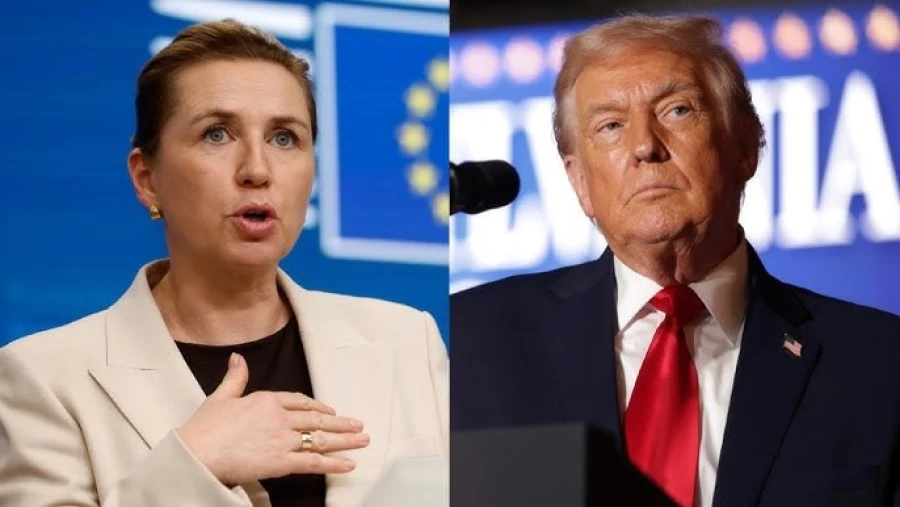
The concept of purchasing sovereign territory is often relegated to the history books, nestled alongside the Louisiana Purchase or the sale of Alaska. Yet, the idea of annexing Greenland has abruptly returned to the global stage, shedding its status as a geopolitical oddity to become a subject of fierce debate. This time, however, the conversation has evolved beyond a simple real estate transaction between nations. It now includes a radical vision for a “Freedom City” and a controversial proposal to offer a $100,000 payout to residents.
This modern iteration of expansionism has triggered a firestorm of responses, ranging from incredulity to intrigue. It challenges established norms regarding sovereignty, indigenous rights, and the strategic balance of the Arctic. While the notion may seem far-fetched to many, the specifics of the proposal—financial incentives and deregulated zones—merit a closer inspection to understand why they have captured the world’s attention.
In this deep dive, we explore the mechanics of the Greenland annexation proposal, the allure of the “Freedom City” model, and the geopolitical chess game playing out in the High North. Whether viewed as a serious policy roadmap or political theatre, the implications of such a dialogue extend far beyond the icy shores of the world’s largest island.
What Is the Greenland Annexation Proposal?
To understand the current furore, one must look at the history of the idea. The United States has harboured strategic interests in Greenland for decades. In 1946, President Harry Truman offered Denmark $100 million in gold for the island, recognising its pivotal location during the early days of the Cold War. While that offer was rejected, the strategic value of Greenland has only increased.
Origins of the Annexation Idea
The modern resurgence of this idea is not occurring in a vacuum. It builds upon a long-standing recognition that Greenland sits at a critical intersection between North America, Europe, and the polar route to Asia. The recent proposal revitalises this interest but packages it differently. Instead of a straightforward government-to-government transaction, which was swiftly rebuffed by Danish Prime Minister Mette Frederiksen as “absurd” in previous years, the new approach incorporates direct incentives to the population and a unique governance model.
Political Figures and Movements Backing It
The proposal has found traction among a specific subset of political strategists and populist movements who view traditional diplomacy as inefficient. Proponents argue that the current arrangement—where Greenland is an autonomous territory within the Kingdom of Denmark—limits the island’s economic potential. By integrating with a larger superpower, they argue, Greenland could unlock vast mineral wealth that is currently inaccessible due to lack of infrastructure and capital.
How the Proposal Re-emerged in Global Discourse
The idea resurfaced through leaked policy papers and think-tank discussions that framed the acquisition not as a conquest, but as a “merger” or “partnership”. This rhetorical shift aims to bypass the colonial undertones of purchasing land and people, framing it instead as a mutually beneficial business deal. The introduction of the “Freedom City” concept and direct cash payouts marks a distinct pivot towards winning the “hearts and minds” of the local populace, rather than just negotiating with Copenhagen.
Understanding the “Freedom City” Vision
At the heart of the new annexation proposal lies the “Freedom City”. This concept proposes carving out a specific zone within Greenland that would operate under a radically different legal and economic framework than the rest of the territory, or indeed, the purchasing nation.
What “Freedom City” Means in Policy Terms
A Freedom City is envisioned as a charter city—a semi-autonomous zone with its own set of laws, judicial systems, and economic regulations. The policy goal is to create a hyper-capitalist hub in the Arctic. Proponents suggest that by eliminating corporate taxes, reducing regulatory burdens, and streamlining trade laws, this zone would attract massive foreign investment, turning a remote icy outpost into a bustling hub of commerce and innovation.
Economic, Political, and Governance Structure Proposed
Structurally, the city would likely function similarly to a corporation. Governance might be overseen by a board of trustees or a private-public partnership rather than elected officials in the traditional sense. This model draws inspiration from the theoretical works of economists like Paul Romer, who argued that charter cities could fast-track development in stagnant economies. Politically, it creates a loophole: while the land might be annexed, the city itself would offer a “blank slate” for governance, free from the bureaucratic entanglements of Copenhagen or Washington.
Comparisons with Special Economic Zones or City-States
The closest real-world comparisons are places like Dubai, Singapore, or the special economic zones (SEZs) of China. However, the Freedom City vision is more libertarian in nature. It promises not just ease of business, but a fundamental restructuring of civic life where market forces dictate infrastructure and services. Critics argue this could lead to a two-tier society, but supporters claim it is the only way to make the harsh Arctic environment economically viable without massive state subsidies.
The $100,000 Payout Proposal Explained
Perhaps the most headline-grabbing aspect of the plan is the financial incentive: a proposed lump-sum payment of $100,000.
Who Would Receive the Payout and Why
The proposal suggests that this payment would go directly to every permanent resident of Greenland. With a population of roughly 56,000, the total cost would be approximately $5.6 billion—a figure that, while substantial, is negligible compared to national defence budgets. The rationale is simple: bypass the government and appeal directly to the citizens. It is an attempt to monetise citizenship and consent, effectively asking the Greenlandic people to vote with their wallets.
Intended Economic and Political Incentives
Economically, the payout acts as a stimulus package, theoretically jump-starting the local economy. Politically, it serves as a wedge. By offering a life-changing sum of money to individuals, proponents hope to create internal pressure on the local government to consider the annexation deal. It reframes the loss of sovereignty as a financial gain, positing that national identity can be weighed against immediate economic security.
Supporters’ Arguments vs Critics’ Concerns
Supporters argue that this is the ultimate form of democracy—giving resources directly to the people rather than filtering aid through government bureaucracies. They claim it would empower Greenlanders to start businesses and improve their standard of living. Critics, however, view it as bribery on a national scale. They argue it preys on economic vulnerability and treats sovereign rights as a tradable commodity. The ethical implication is that a people’s heritage and autonomy can be bought, setting a dangerous precedent for international relations.
Why Greenland Matters Strategically
The intensity of this debate is not merely about money or governance models; it is about the strategic dominance of the Arctic.
Arctic Geopolitics and Global Power Competition
As polar ice melts, the Arctic is opening up. What was once an impassable frozen barrier is becoming a new frontier for commerce and conflict. Russia has aggressively militarised its northern coast, reopening Soviet-era bases. China has declared itself a “near-Arctic state,” eyeing the region for its Belt and Road Initiative. For NATO and the West, maintaining control over Greenland is essential to checking these expanding influences.
Natural Resources and Shipping Routes
Greenland is not just ice; it is a treasure trove of geology. The island holds some of the world’s largest undeveloped deposits of rare earth metals—neodymium, praseodymium, and dysprosium—which are critical for manufacturing everything from electric vehicles to fighter jets. Currently, China dominates the supply chain for these minerals. Controlling Greenland would break that monopoly. Furthermore, the opening of trans-polar shipping routes could slash travel time between Europe and Asia, making Greenland a potential logistics hub for global trade.
Military and Climate-Related Significance
From a military standpoint, Greenland is irreplaceable. The Thule Air Base (now Pituffik Space Base) is the US military’s northernmost installation and is vital for missile warning and space surveillance. Annexation would secure this asset permanently. Conversely, climate change makes the island a focal point for scientific research. Owning the territory would provide unrestricted access to data that is crucial for understanding global weather patterns and rising sea levels.
Denmark and Greenland’s Response
The reaction from the Kingdom of Denmark has been a mixture of amusement and indignation.
Official Statements from Danish Authorities
Copenhagen has consistently maintained that Greenland is not a commodity to be traded. Danish officials emphasise the 1953 constitution and the 2009 Act on Greenland Self-Government, which grants the island extensive autonomy. Any change in status would require the approval of both the Greenlandic people and the Danish parliament. The Danish government views the proposal as a misunderstanding of how modern democracies function.
Reaction from Greenland’s Local Leadership and Citizens
In Nuuk, the capital of Greenland, the response has been even sharper. Local leaders have stated clearly: “We are open for business, but we are not for sale.” There is a strong movement towards full independence from Denmark, but substituting one distant ruler for another does not align with that goal. While the $100,000 figure is eye-watering for many, the cultural attachment to the land and the desire for self-determination generally outweigh short-term financial gain.
Sovereignty and Self-Determination Concerns
The debate highlights a fundamental disconnect. For Greenlanders, their land is defined by Inuit heritage, culture, and a distinct way of life. The annexation proposal is often viewed through a colonial lens, reminiscent of an era where territories were swapped without the consent of the inhabitants. The “Freedom City” concept, with its potential influx of foreign workers and businesses, threatens to dilute this cultural identity even further.
International Reaction and NATO Implications
The ripples of this proposal have reached the corridors of Brussels and Washington.
Responses from NATO Allies
NATO allies have generally reacted with caution. While strengthening the alliance’s Arctic flank is a shared goal, unilateral moves to annex territory cause diplomatic friction. European allies worry that such aggressive posturing undermines the rules-based international order. If a NATO member begins treating territory as purchasable, it weakens the moral argument against adversaries who seek to expand their borders through force or coercion.
Fears of Alliance Tension and Diplomatic Fallout
The proposal places Denmark in an awkward position. As a staunch US ally, Denmark hosts American military assets willingly. However, proposals that bypass Danish sovereignty strain this relationship. It forces Copenhagen to be defensive, potentially hindering cooperation on other security matters.
How This Proposal Could Reshape Arctic Alliances
If the US or another power were to aggressively pursue this policy, it could fracture the unity of the Arctic Council. It might push Greenland and Denmark closer together in defence of the status quo, or conversely, drive a wedge between them if Greenlandic separatists see the buyout as a viable path to independence from Denmark (albeit dependent on a new patron).
Legal and Ethical Challenges
Beyond politics, the legal hurdles are immense.
International Law and Territorial Sovereignty
Under the UN Charter, the transfer of territory requires the free consent of the people. A “hostile” purchase or one achieved through economic coercion would likely be deemed illegal. Furthermore, the rights of indigenous peoples are protected under international declarations, which would make the imposition of a “Freedom City” zone without full local consensus a violation of human rights.
Ethical Concerns Around Financial Incentives
The ethics of the $100,000 payout are particularly murky. Is it ethical to offer life-changing sums to a small population in exchange for their sovereign rights? Critics call this “chequebook colonialism”. It raises questions about the validity of consent when it is purchased. If a vote were held, could it be considered free and fair if the electorate is being directly paid to vote a certain way?
Feasibility Under Existing Treaties
Existing defence treaties between the US, Denmark, and Greenland complicate matters. These agreements already provide for mutual defence and base usage. Annexation would require tearing up these treaties and drafting new ones—a legal quagmire that could take decades to resolve.
Public Opinion and Media Narratives
The global conversation has been polarised, fueled by a 24-hour news cycle hungry for controversy.
How Global Media Is Framing the Proposal
Mainstream media outlets have oscillated between treating the story as a curiosity and a serious geopolitical signal. Business publications often analyse the “Freedom City” economic model, while political broadsheets focus on the diplomatic fallout. Tabloids, naturally, focus on the sensational cash payout figure.
Social Media Reactions and Public Debate
On social media, the reaction is a mix of memes and outrage. The absurdity of “buying a country” fits well into the ironic humour of the internet. However, serious discussions also take place regarding the neglect of the Arctic and the need for better economic development models for remote communities.
Polarization Around the Idea of Annexation
The debate reflects a wider global polarisation. Nationalists tend to support the idea as a bold projection of power. Internationalists and progressives decry it as imperialistic. The “Freedom City” aspect appeals to libertarians, while alarming those who advocate for strong social safety nets and environmental protections.
Is the Proposal Serious Policy or Political Theatre?
Finally, one must ask: is this real?
Analysis of Intent vs Optics
In modern politics, the line between policy and performance art is often blurred. The proposal may be a “negotiating anchor”—an extreme starting position designed to make other, smaller demands (like expanded mining rights or base expansions) seem reasonable by comparison. By asking for the whole island, a trade deal for rare earth minerals might be easier to secure.
Historical Parallels to Controversial Territorial Proposals
History is full of failed territorial bids that nonetheless shifted the needle. The initial rejection of the Alaska purchase was mocked as “Seward’s Folly” before it was accepted. This proposal, even if it fails, changes the window of discourse. It normalises the idea that Greenland’s status is up for discussion.
Expert Opinions on Likelihood of Execution
Most geopolitical experts rate the likelihood of actual annexation as near zero. The legal, cultural, and diplomatic barriers are simply too high. However, the likelihood of increased economic integration, US investment, and a stronger military presence is very high. The “Freedom City” might never be built, but a special trade zone could well be the compromise.
Conclusion
The debate surrounding the annexation of Greenland, the establishment of a “Freedom City,” and the offer of a $100,000 citizen payout is a fascinating case study in 21st-century geopolitics. It combines the resource hunger of the future with the territorial ambitions of the past.
While the probability of Greenland changing flags remains slim, the proposal has successfully highlighted the immense value of the Arctic. It has forced Denmark, the US, and Greenland to re-evaluate their relationships and the price of sovereignty. As the ice melts and the world turns its eyes North, the question is not necessarily whether Greenland is for sale, but rather how the world powers will navigate the delicate balance between cooperation and competition in the planet’s final frontier.
The “Freedom City” may be a fantasy, but the scramble for the Arctic is very real.
Stay Ahead of the Global Curve
Geopolitics is moving faster than ever. To stay informed on the shifting dynamics of the Arctic and other strategic frontiers, subscribe to our newsletter for weekly in-depth analysis and expert commentary.
Leave a Reply