

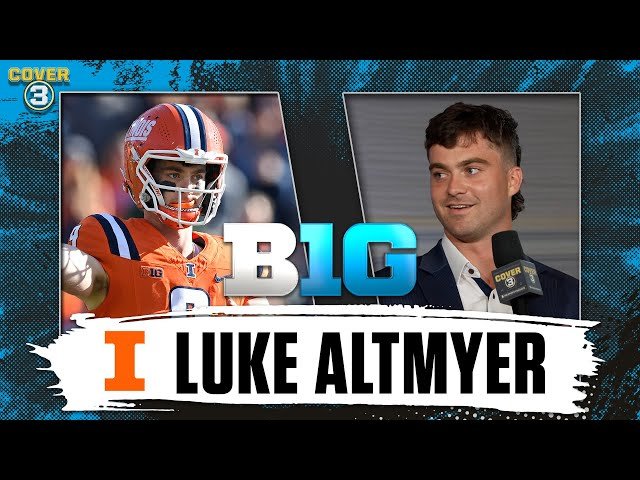
Sports history is filled with iconic plays—hail mary passes, buzzer-beating shots, and acrobatic catches. But every so often, a moment occurs that is so bizarre, so unplanned, and so impactful that it transcends the game itself. For the Illinois Fighting Illini, that moment didn’t come from a designed blitz or a perfect spiral. It came from a collision.
During a critical juncture in a high-stakes matchup, Illinois quarterback Luke Altmyer found himself in an unexpected tangle—not with a linebacker or a safety, but with the head referee. What looked like a blooper reel highlight at first glance quickly revealed itself to be a pivotal turning point in the game. The internet laughed, the announcers gasped, and the fans in Champaign held their breath.
Yet, beyond the humor of a player running into an official lies a story of resilience, luck, and the razor-thin margins that define a championship chase. In football, momentum is everything. Sometimes, you earn it. Sometimes, you take it. And sometimes, you stumble into it literally by running into the zebra.
This article breaks down exactly what happened between Altmyer and the referee, why the flags stayed in the officials’ pockets, and how this strange twist of fate might just be the reason Illinois is still talking about title hopes.
What Happened? The Viral Collision Explained
To understand the absurdity of the moment, you have to set the scene. The game was tight. The tension in Memorial Stadium was palpable. Illinois was driving, looking to either chew clock or punch in a score to solidify their position. Every yard mattered, and the defense was playing aggressive, downhill football.
The Play Breakdown
It was a designed rollout. The pocket collapsed slightly, forcing Altmyer to use his legs—a strength of his game all season. As he scrambled to his right, scanning downfield for an open receiver or a lane to run, the officiating crew was adjusting their positioning to keep up with the play.
The head referee, positioned behind the offensive backfield as is standard, moved to get a better angle on the unfolding scramble. Simultaneously, Altmyer cut back against the grain to evade a pursuing defender. The result was a full-speed collision. The quarterback and the official met shoulder-to-chest, sending the referee tumbling to the turf while Altmyer stumbled, barely keeping his balance.
The Immediate Reaction
Chaos ensued. For a split second, everyone on the field froze. The defenders assumed the play was dead or that a flag was coming. The crowd let out a collective gasp, unsure if their quarterback had just committed a foul or if he was injured.
But the whistle didn’t blow immediately. Altmyer, realizing he was still live, regained his footing and scrambled for a few extra, crucial yards before sliding. The referee, displaying surprising durability, popped back up, signaling the end of the play. It was a chaotic sequence that looked more like a wrestling match than a Big Ten football play, leaving everyone in the stadium asking the same question: “Did that really just happen?”
Why the Play Didn’t Result in a Penalty
Almost immediately after the collision, opposing fans and coaches were screaming for a flag. In the NFL and college football, contact with an official is taken very seriously. So, why wasn’t Altmyer penalized? Why didn’t this result in an unsportsmanlike conduct call or even an ejection?
NCAA Rules on Referee Contact
The NCAA rulebook is strict regarding intentional contact. Rule 9-2-4 states that no player or non-player shall intentionally contact a game official. The key word here is “intentionally.” If a player shoving a ref out of frustration or anger, that is an immediate flag and disqualification.
However, the rules also account for the chaotic nature of the game. Officials are considered “part of the field.” If a ball hits a ref, it’s live. If a player runs into a ref during the natural course of play, it is generally treated as an inadvertent collision—similar to tripping over the turf monster.
The Judgment Call
Upon review, and likely through real-time observation, the officiating crew determined there was zero malicious intent. Altmyer wasn’t looking at the official; he was looking downfield. He was taking evasive action to avoid a sack. The referee happened to occupy the space where Altmyer needed to go.
It was a classic case of two people moving into the same space at the same time. The officials correctly interpreted the collision as incidental contact. Had they flagged it, it would have been a controversial call that likely would have been overturned or heavily criticized by the NCAA later. The non-call was the correct call, reinforcing that football is a game of unpredictable variables.
How the Collision Shifted Momentum for Illinois
In sports, momentum is a tangible force. Before the collision, the drive felt stalled. The offense was disjointed, and the defense was bringing relentless pressure. The collision changed the energy in the stadium and on the sideline.
Extending the Drive
The scramble, aided by the inadvertent “pick” set by the referee, resulted in a modest gain. But more importantly, it kept the chains moving. It turned a potential sack or a throw-away down into positive yardage on a crucial down. Those extra yards made the next play manageable, allowing Illinois to continue eating up the clock and resting their defense.
A Psychological Lift
There is something galvanizing about surviving a chaotic moment. When Altmyer stayed upright and fought for extra yards, the sideline erupted. It showed grit. It showed a refusal to go down, even when the obstacles included the men in stripes.
The crowd, realizing the absurdity and the luck of the moment, grew louder. The tension broke, replaced by a raucous energy. The opposing defense, frustrated by the missed tackle and the referee interference, seemed to lose a step. They were arguing for a call that wasn’t coming, while Illinois was huddling up, ready to snap the ball. That lapse in focus was all the Illini needed to march down the field.
Luke Altmyer’s Response After the Collision
A lesser quarterback might have been rattled. Colliding with an official is disorienting. It breaks your rhythm and can make you second-guess your scrambling lanes. But Luke Altmyer’s response to the incident was a masterclass in composure.
Leadership and Composure
Instead of laughing it off or complaining to the ref, Altmyer got up, checked on the official briefly, and immediately rallied his offense. He didn’t let the spectacle of the moment distract him from the mission. His body language said, “Next play.”
This kind of leadership is infectious. When the quarterback remains cool in the face of chaos, the rest of the team follows suit. The offensive line tightened up. The receivers ran sharper routes. The goofy collision seemed to lock Altmyer in rather than shake him up.
Performance Under Pressure
On the very next set of downs, Altmyer delivered one of his best throws of the game—a tight-window strike over the middle that moved Illinois into the red zone. He followed that up with decisive decision-making, ensuring the drive ended in points.
The collision was the headline, but the response was the story. It proved that Altmyer isn’t just physically talented; he has the mental fortitude required to lead a team through a title chase. He turned a potential blooper into a statement drive.
Social Media Erupts
While the game continued, the internet was already doing what it does best. Within minutes, the clip of Altmyer trucking the referee was circulating on X (formerly Twitter), Instagram, and TikTok.
Viral Clips and Memes
The video was perfect for social media. It was short, visually arresting, and funny without being dangerous (since the ref was okay). Comparisons were instantly made to WWE moves, bowling pins, and “The Longest Yard.”
Memes flooded timelines. One popular edit featured the “Grand Theft Auto” wasted screen overlaying the ref. Another captioned the photo of the collision with “Me vs. My Responsibilities.”
Fan and Analyst Reactions
Sports analysts, usually reserved for discussing coverages and blocking schemes, couldn’t help but weigh in. Pat McAfee broke it down with his signature energy. SportsCenter featured it in their Top 10—not for the skill, but for the spectacle.
For Illinois fans, the viral nature of the play was a badge of honor. It put eyes on their program. It got people talking about Illinois football on a national stage. In the modern era of recruiting and branding, all publicity is good publicity, and this collision dominated the news cycle for the entire weekend.
What This Moment Meant for Illinois’ Title Hopes
Football seasons are often defined by “what if” moments. What if the field goal post was six inches wider? What if the receiver didn’t slip? For Illinois, the question is: What if the ref hadn’t been there?
The Game Implications
If the referee isn’t in that spot, does Altmyer get sacked? Does the drive stall? Does the opposing team get the ball back with enough time to score a winning touchdown?
It is impossible to say for certain, but the collision undeniably burned time and extended a possession that was vital for the win. In a conference as competitive as the Big Ten, the difference between a win and a loss can be the difference between playing for a championship and playing in a mid-tier bowl game.
Keeping the Dream Alive
That win kept Illinois in the hunt. It preserved their standing in the conference and kept morale high. A loss in that spot could have been demoralizing, potentially sending the season into a tailspin. Instead, the team rallied around the bizarre victory.
Every championship team looks back on one or two moments where the ball bounced their way. For Illinois, their lucky bounce was a collision with a referee. It’s a strange chapter in their season’s story, but it’s a chapter that kept the book open.
Referee Safety and On-Field Awareness
While the incident provided laughs and momentum, it also sparked a serious conversation about official safety. Referees are often older than the athletes they share the field with, and they are not wearing pads. A collision with a D1 athlete moving at full speed can cause serious injury.
Positioning Challenges
The modern game is faster than ever. Spread offenses, RPOs (Run-Pass Options), and mobile quarterbacks make officiating incredibly difficult. Referees have to be close enough to see the play but far enough away to stay safe.
This incident highlighted the difficulty of that balance. The referee was in a standard position, but the play broke down in a non-standard way.
Calls for Better Protocols
Some analysts have suggested that officiating mechanics need to evolve. Should the umpire (the ref usually in the defensive backfield) be moved? Should technology play a bigger role to reduce the number of bodies on the field?
While drastic changes are unlikely mid-season, this collision served as a reminder for officials everywhere to keep their heads on a swivel. It also served as a reminder to players that the field is a workplace for everyone, stripes included.
Why This Collision Will Be Remembered
Years from now, when fans look back on this Illinois season, they will remember the big wins and the stats. But they will also remember the “Ref Game.”
There is a fine line between chaos and opportunity. Great teams find a way to navigate that chaos and come out the other side. Luke Altmyer and the Illini didn’t just survive the collision; they used it. They took a moment that could have been a disaster and turned it into a W.
It was a strange, viral, lucky, and resilient moment. And if Illinois manages to lift a trophy at the end of the year, that referee deserves a ring—or at least an ice pack.
Frequently Asked Questions
What happened between Luke Altmyer and the referee?
During a scramble play, Illinois quarterback Luke Altmyer accidentally collided with the head referee. The official was knocked to the ground, and Altmyer stumbled but continued the play. The moment went viral due to the intensity of the hit and the unusual nature of the play.
Did Luke Altmyer get penalized for hitting the ref?
No, he was not penalized. The officials ruled the contact as incidental and unintentional. According to NCAA rules, players are not penalized for running into officials during the natural course of play unless the act is deemed deliberate or malicious.
Why is the Luke Altmyer collision going viral?
The clip went viral because of its visual impact—it looked like a tackle—and the sheer absurdity of a quarterback “trucking” a referee. It became instant meme material across social platforms like X and TikTok.
How did the collision affect Illinois’ season?
The play helped extend a critical drive, allowing Illinois to consume clock and eventually secure a win. This victory was essential for maintaining their standing in the Big Ten and keeping their hopes for a conference title alive.
Don’t Miss the Next Big Moment
Illinois football is heating up, and you don’t want to miss a single play (or collision). Whether it’s breaking down game film or getting the latest recruiting news, we have you covered.
Subscribe to our newsletter today for exclusive Illini updates and
Leave a Reply