

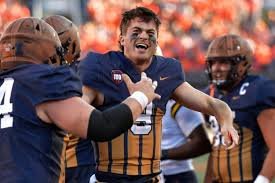
If you told an Illinois football fan in 2020 that their team would soon be a legitimate threat in the Big Ten West, you likely would have been met with skepticism. For years, the Fighting Illini were often viewed as the “easy win” on the schedule for powerhouses like Ohio State, Michigan, and Wisconsin. The program struggled to find its footing, cycling through coaches and disappointing seasons with alarming regularity.
But then came Bret Bielema.
In just two seasons, the narrative around Champaign has completely shifted. What was once a dormant program searching for an identity has transformed into a physical, disciplined, and dangerous team that no one takes lightly. The rise has been swift, surprising even the most optimistic pundits. But looking closer, this wasn’t an accident. It was a meticulously executed plan by a coach who knows exactly how to win in the Big Ten.
This turnaround matters not just for Illini fans, but for the national college football landscape. It proves that with the right leadership, culture, and developmental focus, programs can escape the basement of their conferences without needing five years to do it.
Illinois Football Before Bret Bielema
To appreciate the height of the current climb, you have to look at the valley Illinois was stuck in. Before Bielema’s arrival in December 2020, the program was plagued by inconsistency. The Lovie Smith era, while bringing some NFL pedigree, failed to translate into sustainable winning. The team often looked uncompetitive against top-tier opponents, lacking the physical strength and tactical discipline required to survive a grueling Big Ten schedule.
Recruiting was another significant hurdle. Illinois struggled to keep homegrown talent within the state borders. Top prospects from Chicago and St. Louis were routinely poached by Notre Dame, Iowa, Wisconsin, and Michigan. Without a pipeline of local talent, the roster lacked the depth needed to compete late in the season. November collapses became a predictable tradition.
The gap between Illinois and the rest of the Big Ten seemed to be widening. While teams like Northwestern and Minnesota were finding ways to punch above their weight, Illinois remained stagnant. The Memorial Stadium stands were often half-empty, and apathy had set in among the fanbase. The program needed more than just a new coach; it needed a complete overhaul of its DNA.
The Bielema Blueprint
Bret Bielema arrived in Champaign with a resumé that commanded respect. His success at Wisconsin—where he won three consecutive Big Ten titles—proved he understood the conference’s unique demands. His blueprint wasn’t about flashy offenses or gimmicks. It was about returning to the fundamentals of football: physicality, toughness, and discipline.
From day one, Bielema emphasized “complimentary football.” He wanted an offense that could control the clock and a defense that could suffocate opponents. This style of play, often referred to as “bully ball,” is a staple of the Big Ten, but Illinois hadn’t practiced it effectively in years. Bielema made it clear that they weren’t going to try to out-athlete teams like Ohio State; they were going to out-work and out-hit them.
Discipline became the non-negotiable standard. Penalties, missed assignments, and mental errors were targeted relentlessly in practice. Bielema preached accountability, ensuring that every player understood their role and the consequences of failing to execute it. This wasn’t just coach-speak; it was a daily operational philosophy that started to show up on game days immediately.
Culture Shift Inside the Program
Strategies are useless without a culture to support them. The biggest change under Bielema happened where the cameras couldn’t see: the locker room. He inherited a roster that was used to losing, and his first task was to instill a belief that they could win.
This started with the “famILLy” concept—a genuine commitment to brotherhood and mutual trust. Bielema focused heavily on player development, not just as athletes but as young men. He brought in a strength and conditioning program, led by Tank Wright, that transformed the bodies of the players. They got bigger, faster, and significantly stronger. The offensive and defensive lines—the heart of Bielema’s philosophy—began to look like legitimate Big Ten units.
Leadership standards were raised. Bielema empowered his captains and veteran players to hold the team accountable. The culture shifted from individualistic thinking to a collective mindset. Players started playing for each other rather than for their own stats. This unity was palpable on the sideline, where energy and support replaced the slumped shoulders of previous years.
Recruiting and Roster Transformation
A major criticism of the previous regime was the neglect of in-state recruiting. Bielema made it a priority to “lock down the state.” He and his staff aggressively targeted high school coaches across Illinois, rebuilding relationships that had been allowed to wither. While they didn’t land every five-star recruit immediately, they started winning battles for the three- and four-star players who form the backbone of a successful roster.
The transfer portal also played a crucial role. Bielema used it surgically, bringing in experienced players who could plug immediate gaps while the younger recruits developed. He looked for guys with a chip on their shoulder—players who had been overlooked or underutilized elsewhere.
But perhaps the most important work was done in the trenches. Bielema knows you can’t win in the Big Ten without elite line play. He recruited massive offensive linemen and disruptive defensive tackles, building depth that allowed Illinois to wear teams down in the fourth quarter. The “next man up” mentality became a reality because the backups were finally capable of playing winning football.
On-Field Results That Changed Perception
The results of this overhaul were visible quickly. In 2022, Illinois didn’t just improve; they arrived. The defense, coordinated by Ryan Walters (who would later become Purdue’s head coach), became one of the best in the nation. They led the country in scoring defense for much of the season, strangling offenses and forcing turnovers.
Signature wins started to pile up. Beating Wisconsin in Madison and Iowa at home signaled a changing of the guard in the Big Ten West. These weren’t flukes; they were dominant performances where Illinois physically controlled the game. The team reached a bowl game, a significant milestone that validated the process.
Metrics backed up the eye test. The Illini ranked near the top of the conference in rushing yards allowed and time of possession. Chase Brown became a Doak Walker Award finalist, thriving behind an offensive line that mauled opponents. Illinois wasn’t just winning games; they were winning them the way Bielema said they would. The perception of Illinois changed from “easy out” to “pack a lunch because this is going to be a long day.”
Luke Altmyer and the Quarterback Evolution
A critical piece of the puzzle has been the evolution of the quarterback position. In the modern game, you need stability under center, even in a run-first system. Bielema brought in transfer Luke Altmyer to stabilize the offense, and the move paid dividends.
Altmyer wasn’t asked to be a superhero. He was asked to manage the game, make smart decisions, and extend plays with his legs when necessary. Under offensive coordinator Barry Lunney Jr., Altmyer developed into a reliable leader. He limited turnovers—a massive issue in previous years—and executed the offense efficiently.
His development allowed Illinois to open up the playbook. Opponents could no longer stack the box to stop the run without fear of getting burned through the air. This balance made the offense unpredictable and much harder to defend. Altmyer’s growth mirrors the program’s trajectory: steady, confident, and increasingly dangerous.
Why Illinois Is Now a Legit Big Ten Force
So, is this sustainable? All signs point to yes. Illinois has moved beyond being a “flash in the pan” underdog story. They have established a consistent identity that travels well. Physical defense and a strong running game work in any weather and against any opponent.
One of their biggest advantages is favorable matchups. Because they play a unique, bruising style, opponents have to prepare differently for Illinois than they do for the spread offenses prevalent elsewhere. This preparation tax wears teams down.
Crucially, they have earned the respect of their rivals. Coaches across the Big Ten now speak about Illinois with a different tone. They know that Bielema’s teams are going to hit hard and play for 60 minutes. That psychological edge—knowing your opponent respects and perhaps even fears your physicality—is invaluable.
Challenges Ahead for the Bielema Era
Despite the success, challenges remain. The biggest hurdle for any rising program is sustaining success. It’s one thing to climb the mountain; it’s another to set up camp there. Illinois is no longer sneaking up on anyone. They will get every opponent’s best shot.
Recruiting battles will intensify. As Illinois wins more, they will target higher-profile recruits, putting them in direct competition with the Ohio States and Michigans of the world. Winning those battles is essential to raising the program’s ceiling.
Furthermore, the Big Ten is expanding. With the addition of USC, UCLA, Oregon, and Washington, the conference is becoming even more brutal. Bielema will have to adapt his “bully ball” style to compete with the speed and athleticism of these West Coast powerhouses. Can a traditional Big Ten style slow down a high-flying Pac-12 offense? That will be the defining question of the next few years.
Conclusion
The transformation of Illinois football under Bret Bielema is a masterclass in program building. It wasn’t about magic wands or quick fixes. It was about installing a proven system, changing the culture, and recruiting players who fit the mold.
This rebuild worked because it was authentic. Bielema didn’t try to make Illinois something it wasn’t. He embraced the tough, gritty identity of the state and built a team to match it.
The long-term outlook is bright. With a stable coaching staff, improved facilities, and a renewed fan base, Illinois has the infrastructure to be a consistent winner. The Bret Bielema era has proven that with the right leader, even the most dormant giants can wake up.
Ready to see the Illini in action? Check out the upcoming schedule and grab your tickets today.
FAQ
How did Bret Bielema transform Illinois football?
Bielema transformed the program by instilling a culture of discipline, toughness, and accountability. He focused on physical development in the weight room, prioritized offensive and defensive line play, and aggressively recruited in-state talent and impactful transfers to build depth.
How long did it take Illinois to become competitive again?
It took only two seasons. After a 5-7 record in his first year (2021), Bielema led Illinois to an 8-5 record in 2022, which included a bowl appearance and contention for the Big Ten West title into November.
Is Illinois a Big Ten contender under Bielema?
Yes. While competing for a national title is a massive leap, Illinois has proven it can compete for division titles (prior to expansion changes) and bowl games consistently. They have defeated top-ranked conference opponents and boast one of the league’s most respected defenses.
What makes Bret Bielema’s coaching successful?
Bielema’s success comes from his adherence to “complimentary football.” He builds teams that control the clock with a strong running game and limit opponents with a suffocating defense. His emphasis on player development and disciplined, mistake-free football allows his teams to maximize their talent.
Leave a Reply