

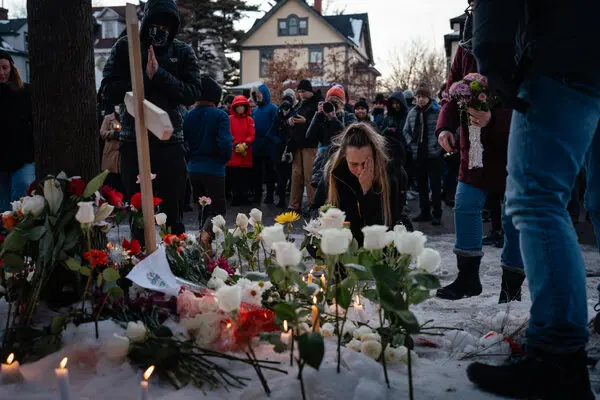
For decades, the image of immigration enforcement in the United States has shifted dramatically. What was once primarily an administrative function has evolved into an operation that closely resembles paramilitary warfare. Heavily armed agents, tactical gear, and raid-style operations have become the standard, signaling a profound change in how the nation manages its borders and interior enforcement.
This shift toward militarization hasn’t just changed the optics of immigration policy; it has fundamentally altered the fabric of communities across the country. As tactical units execute high-stakes operations in residential neighborhoods, the line between military action and domestic law enforcement blurs, raising serious ethical and legal questions.
Critics argue this isn’t merely a case of a few overzealous agents or isolated incidents. Instead, it represents a systemic failure of policy—a strategy that prioritizes aggression over effectiveness and fear over public safety. As evidence mounts that these tactics cause more harm than good, the debate over the future of immigration enforcement has never been more urgent.
What Is Militarized Immigration Enforcement?
Militarized immigration enforcement refers to the adoption of military tactics, equipment, and organizational structures by civilian immigration agencies. It transforms routine law enforcement activities into combat-style operations. This trend is most visible in the operations of agencies like Immigration and Customs Enforcement (ICE) and Customs and Border Protection (CBP).
The characteristics are unmistakable: the use of assault rifles, armored vehicles, and surveillance technology originally designed for foreign battlefields. Agents often wear tactical uniforms that make them indistinguishable from soldiers or SWAT teams. This visual and operational shift signals a move away from civil service and toward a warrior mentality.
Crucially, this approach blurs the traditional separation between military defense and domestic policing. By treating immigrant communities as hostile territories and individuals as enemy combatants, the government employs a level of force that is disproportionate to the civil violations usually at hand.
How We Got Here
The roots of this transformation run deep, but the pivotal moment came in the wake of the September 11 attacks. As the nation grappled with new security threats, the newly created Department of Homeland Security (DHS) absorbed immigration functions, effectively reframing migration as a national security issue rather than a matter of labor or civil regulation.
This shift unlocked massive funding streams and expanded legal authorities. Resources poured into border security and interior enforcement, allowing agencies to acquire military-grade surplus equipment. Policy decisions during subsequent administrations further normalized this aggression, prioritizing “zero-tolerance” approaches and rapid deportation quotas over due process or community stability.
Over time, what began as emergency security measures calcified into standard operating procedure. The result is an enforcement apparatus that operates with the intensity of a counter-terrorism strike force, applied to families and workers.
The Impact on Immigrant Communities
The psychological toll of militarized enforcement is profound. In neighborhoods across the U.S., the mere presence of armed federal agents instills a pervasive sense of fear. This trauma extends beyond those who are undocumented, affecting lawful residents and citizens who share these communities.
Distrust of authorities becomes a survival mechanism. Families stop driving to work, parents are afraid to drop their children off at school, and victims of crime refuse to call the police for fear of deportation. The result is a shadow population that is forced to live on the margins, cut off from essential services like healthcare and the legal system.
The long-term consequences are devastating. Children growing up in these environments suffer from chronic stress and anxiety, with developmental impacts that can last a lifetime. The constant threat of family separation destabilizes household economics and mental health, creating cycles of vulnerability that are difficult to break.
When Enforcement Becomes Community Breakdown
The damage isn’t limited to individual households; it fractures the relationship between law enforcement and the public at large. Effective policing relies on cooperation and trust. When residents believe that any interaction with police could lead to a militarized raid or deportation, that trust evaporates.
Local police departments often find their work undermined by federal aggression. When witnesses go silent and victims hide, crimes go unsolved, and public safety suffers for everyone. The community stops functioning as a cohesive unit where neighbors look out for one another and instead becomes fragmented by suspicion.
This breakdown of community cohesion creates a paradox: the very tactics justified in the name of “law and order” actually make neighborhoods less safe. By prioritizing the detention of immigrants over the stability of the community, militarized enforcement creates voids where criminal activity can actually thrive because the populace is too afraid to engage with the justice system.
High-Profile Incidents That Exposed the Cracks
The inherent dangers of this strategy have been laid bare by numerous high-profile incidents. Use-of-force cases involving federal agents have resulted in tragic, often avoidable deaths and injuries. From shootings in residential areas to the aggressive detention of U.S. citizens based on racial profiling, these events act as flashpoints for national outrage.
These are not just procedural errors; they are the inevitable outcomes of a strategy that encourages escalation. When agents are trained and equipped for combat, they are more likely to perceive threats where none exist and resort to lethal force.
Wrongful detentions highlight the chaotic nature of these operations. Stories of parents torn from their children or veterans deported despite their service expose the human rights violations embedded in the system. Each incident chips away at the moral authority of the agencies involved and fuels public demand for accountability.
The Data Problem: Does Militarization Even Work?
Despite the immense financial and social costs, there is a glaring lack of evidence that militarized enforcement actually achieves its stated goals. Proponents argue that aggressive tactics deter illegal immigration and reduce crime, but the data tells a different story.
Studies consistently show no correlation between higher deportation rates and lower crime rates. In fact, immigrants—both documented and undocumented—tend to have lower incarceration rates than native-born citizens. The “deterrence” argument also fails to hold up; migration is driven by powerful push-and-pull factors like economic instability and violence in home countries, forces that are not easily stopped by armored vehicles or harsh raids.
From a cost-benefit perspective, the strategy is a massive drain on taxpayer resources. Raid-style operations are incredibly expensive compared to alternatives like case management or community-based supervision. Experts and academics largely agree: we are spending billions on a theatre of enforcement that yields diminishing returns while inflicting maximum harm.
Local Governments Push Back
Recognizing the collateral damage, many local governments have taken a stand. “Sanctuary city” policies are perhaps the most well-known form of resistance, limiting cooperation between local police and federal immigration agents. These policies are not about shielding criminals, but about preserving local resources and maintaining community trust.
Mayors and governors have increasingly challenged federal tactics in court and in the court of public opinion. Legal standoffs over data sharing, access to jails, and the presence of federal agents in courthouses reflect a growing consensus that militarized enforcement is incompatible with healthy civic life.
This tension between local and federal authorities highlights the disconnect between national political rhetoric and the reality on the ground. Local leaders, who are directly accountable to their diverse constituents, understand that safety depends on inclusion, not exclusion.
The Human Cost Behind the Numbers
Behind every statistic is a human story. It is the father detained while driving his children to soccer practice. It is the mother who seeks sanctuary in a church, unable to leave for fear of arrest. It is the business owner who loses key employees overnight, disrupting the local economy.
These stories illustrate the ripple effects of aggressive enforcement. When a breadwinner is detained, a family loses its income, often leading to housing instability and reliance on social safety nets. When a community loses its members, it loses cultural vitality and social capital.
The damage extends far beyond immigration status. It strikes at the core of human dignity. Treating individuals as targets to be hunted dehumanizes them and desensitizes the broader society to their suffering. This moral erosion is perhaps the highest cost of all.
What Real Immigration Enforcement Reform Could Look Like
Moving away from militarization requires a paradigm shift. Reform must start with demilitarizing the culture of immigration agencies. This means stripping away the combat gear and the warrior mindset, and replacing them with a focus on civil administration and due process.
Community-centered approaches offer a viable alternative. Programs that rely on case management and legal support have proven effective in ensuring compliance with immigration court proceedings without the need for detention or raids. These models treat immigrants as individuals navigating a complex legal system, rather than threats to be neutralized.
Real reform also demands transparency and robust oversight. Independent bodies must have the power to investigate misconduct and hold agents accountable. Without checks and balances, the culture of impunity will continue.
Why This Strategy Is Tearing the Country Apart
The militarization of immigration enforcement has become a potent symbol of the nation’s political polarization. It is a tool used to stoke division, painting complex human issues in black and white terms of “us versus them.” This exploitation of fear deepens the rifts in American society, making compromise and rational policy-making nearly impossible.
Furthermore, the continued use of these tactics erodes trust in democratic institutions. When the government uses overwhelming force against vulnerable populations, it signals that rights are conditional and that power is arbitrary. This cynicism spreads, weakening the social contract for everyone.
Continuing down this path carries grave risks. Escalation breeds escalation. As enforcement becomes more aggressive, resistance intensifies, creating a cycle of conflict that is difficult to de-escalate. To heal these wounds, the country must confront the failure of this strategy and choose a different path—one based on justice, efficacy, and humanity.
Frequently Asked Questions
What is militarized immigration enforcement?
It is the use of military-grade equipment, tactics, and organizational structures by civil immigration agencies like ICE and CBP. This includes the use of assault weapons, armored vehicles, and combat-style raids to detain undocumented immigrants.
Why is ICE criticized for militarized tactics?
Critics argue that these tactics are excessive for civil law enforcement, causing unnecessary trauma to communities, violating civil rights, and blurring the line between policing and warfare. The approach is often seen as prioritizing fear over public safety.
Does aggressive immigration enforcement reduce crime?
Data does not support this claim. Studies indicate that immigrants have lower crime rates than native-born citizens and that aggressive deportation efforts do not lead to significant reductions in violent crime. In some cases, it can hamper crime-fighting by silencing witnesses.
What alternatives exist to militarized enforcement?
Alternatives include community-based case management programs, which have high success rates in ensuring individuals appear for court hearings. These methods are generally less expensive and more humane than detention and raid-based enforcement.
A Call for Dignity and Reform
The strategy of militarized immigration enforcement has failed to deliver on its promises of safety and order. Instead, it has delivered fear, division, and a profound waste of resources. It is a policy that treats neighbors as enemies and transforms communities into battlegrounds.
The path forward requires courage—the courage to admit that force is not a solution to migration. We must demand policies that respect human rights, uphold due process, and prioritize the well-being of all residents. It is time to dismantle the machinery of fear and build an immigration system grounded in dignity and trust.
Join the movement for humane immigration reform. Contact your representatives today and demand an end to the militarization of our communities.
Leave a Reply