

We’ve all been there—that sinking feeling when you hit “submit” on an important document, only to realize moments later that you made a mistake. Maybe it was a typo in a crucial figure, or perhaps you forgot to include an important section entirely. When it comes to your taxes, these small oversights can feel like major disasters.
Filing your Income Tax Return (ITR) is an annual ritual that demands precision, but human error is inevitable. You might have missed reporting interest income from a savings account, claimed the wrong deduction, or simply entered a digit incorrectly. Whatever the reason, discovering an error after you’ve filed your original return can be stressful.
Fortunately, the tax department understands that mistakes happen. This is where the Revised ITR comes into play. It offers a lifeline—a legal opportunity to correct omissions or wrong statements made in your original filing. However, this window of opportunity isn’t open forever. There is a strict timeline, and once the clock strikes twelve on the deadline, your chances of rectifying those errors without penalty diminish significantly.
In this guide, we will walk you through everything you need to know about filing a revised ITR. From understanding eligibility and deadlines to a step-by-step filing guide, we’ll help you navigate the process smoothly so you can rest easy knowing your financial records are accurate and compliant.
What Is a Revised ITR?
A Revised Income Tax Return is essentially a substitute for the original return filed by a taxpayer. Under Section 139(5) of the Income Tax Act, if you discover any omission or wrong statement in your original ITR, you can furnish a revised return to correct these discrepancies.
Think of it as a “do-over.” When you file a revised return, it completely replaces the original one. The income tax department will consider the revised data for processing your assessment, effectively nullifying the previous submission.
Differences Between Original, Defective, and Revised ITR
It is crucial to distinguish between these three terms, as they serve different purposes in the tax ecosystem:
- Original ITR: This is the first return you file for a specific financial year under Section 139(1) or 139(4) (belated return). This establishes your initial declaration of income and taxes.
- Revised ITR: Filed under Section 139(5), this is a voluntary action taken by the taxpayer to correct mistakes in the Original ITR. You can only file a revised return if you have successfully filed an original one.
- Defective ITR: This occurs when the tax department identifies an error or incompleteness in your return (like a missing annexure or mismatched tax payment). They will issue a notice under Section 139(9), and you must correct the defect within a specified time frame. A revised return is voluntary; responding to a defective notice is mandatory.
Eligibility Criteria for Filing
Who can file a revised return? The criteria are quite broad. Any taxpayer who has filed their original return within the due date (Section 139(1)) or a belated return (Section 139(4)) is eligible to revise it.
Previously, only returns filed before the original deadline could be revised. However, current laws allow even belated returns (filed after the July 31st deadline but before the end of the assessment year) to be revised. It is important to note that you cannot file a revised return for a previous year unless you had filed the original return for that specific year.
Deadlines for Filing a Revised ITR
Timing is everything when it comes to taxes. The window for revision is generous, but it has a hard stop. Understanding these timelines is essential to avoid penalties or scrutiny from the tax department.
Official Timeline for the Financial Year
According to the current income tax laws, the deadline to file a revised ITR is December 31st of the Assessment Year (AY), or before the completion of the assessment by the tax department, whichever is earlier.
For example, if you are filing for the Financial Year (FY) 2023-24, the Assessment Year is 2024-25. Therefore, the last date to file a revised return would be December 31, 2024.
If the income tax department completes the assessment of your return (scrutinizing and finalizing your tax liability) before December 31st, you lose the opportunity to revise the return, even if the calendar date hasn’t arrived yet.
Practical Considerations for Last-Minute Filers
Waiting until the last minute is risky. If you file your revised return on December 31st, technical glitches on the e-filing portal due to high traffic could prevent successful submission. Furthermore, finding errors in your revised return at the eleventh hour leaves you with no time to fix them.
Acting early allows you to verify your Annual Information Statement (AIS) and Form 26AS thoroughly. It gives you time to consult with a Chartered Accountant (CA) if the revisions are complex.
Consequences of Missing the Revised Filing Window
If you miss the December 31st deadline, you are generally stuck with the errors in your original ITR.
- If you under-reported income: You may face scrutiny, interest on unpaid taxes, and penalties ranging from 50% to 200% of the tax evaded if the department catches the discrepancy during an audit.
- If you over-reported income: You lose the chance to claim a refund for the excess tax paid.
- Loss of Carry Forward Losses: In some cases, incorrect filing might prevent you from carrying forward losses to future years.
While there is a provision called “Updated Return” (ITR-U) that allows filing up to 24 months from the end of the assessment year, it comes with a hefty penalty of additional tax (25% to 50% extra). A Revised ITR attracts no such penalty, making it the superior option.
Reasons to File a Revised ITR
Why would someone go through the trouble of filing their taxes again? Usually, it comes down to four main categories of errors.
Errors in Income Declaration
This is the most common reason. You might have inadvertently omitted interest income from savings accounts, fixed deposits, or dividends. Perhaps you forgot to disclose a capital gain from the sale of mutual funds. Conversely, you might have accidentally entered a salary figure that was higher than what is reflected in your Form 16. Ensuring your declared income matches the government’s records (AIS/TIS) is vital to avoid notices.
Missing Deductions or Exemptions
Did you forget to claim your HRA (House Rent Allowance)? Did you miss out on the Section 80C deduction for your life insurance premium or 80D for medical insurance?
In the rush to meet the original July deadline, taxpayers often overlook legitimate tax-saving avenues. A revised ITR allows you to claim these deductions retrospectively, potentially lowering your tax liability and increasing your refund.
Corrections in TDS or Tax Payments
Sometimes, the credit for Tax Deducted at Source (TDS) doesn’t reflect in your Form 26AS at the time of original filing. If your employer or bank updates their TDS return later, your initial ITR might show a mismatch. Revising the return allows you to update these TDS details so you get full credit for the taxes already paid on your behalf.
Changes Due to Refund Adjustments
If you initially calculated a refund of $500, but after re-calculating, you realize you are actually eligible for $800, a revised return is the way to claim that additional amount. Similarly, if you claimed a refund you weren’t entitled to, filing a revised return to pay the due tax immediately can save you from heavy interest penalties later.
Step-by-Step Guide to Filing a Revised ITR
Filing a revised return is nearly identical to filing an original one, with a few crucial setting changes. Here is how you can do it online.
1. Accessing the Income Tax Portal
Log in to the official e-filing portal using your PAN (User ID) and password. Once logged in, navigate to e-File > Income Tax Returns > File Income Tax Return.
2. Selecting the Correct ITR Form
Select the Assessment Year (e.g., 2024-25). Under the filing mode, choose “Online.”
In the section asking for the “Filing Type,” this is the most critical step: You must select Section 139(5) – Revised Return.
The portal will ask for the acknowledgement number and the date of filing of the original return. Keep your ITR-V (acknowledgement receipt) of the original filing handy to enter these details accurately.
3. Updating Income, Deductions, and Tax Paid
The form will likely pre-fill data from your original return. Now is the time to make your changes.
- Add the missing income.
- Correct the salary or business income figures.
- Input the deductions you missed earlier.
- Update bank details if necessary.
Carefully review the tax computation sheet. Ensure that the final tax liability or refund matches your new calculations.
4. Submission Process and Verification
Once you have corrected the data, proceed to validation. The system will check for basic errors. After validation, submit the return.
Crucial Step: Just like the original return, a revised ITR must be verified. You can e-verify using an Aadhaar OTP, net banking, or by sending a physical copy to the Central Processing Centre (CPC). Without verification, the revised return is invalid.
Common Mistakes to Avoid
Even when correcting mistakes, new ones can occur. Here is what to watch out for.
Filing with Incorrect PAN or Aadhaar
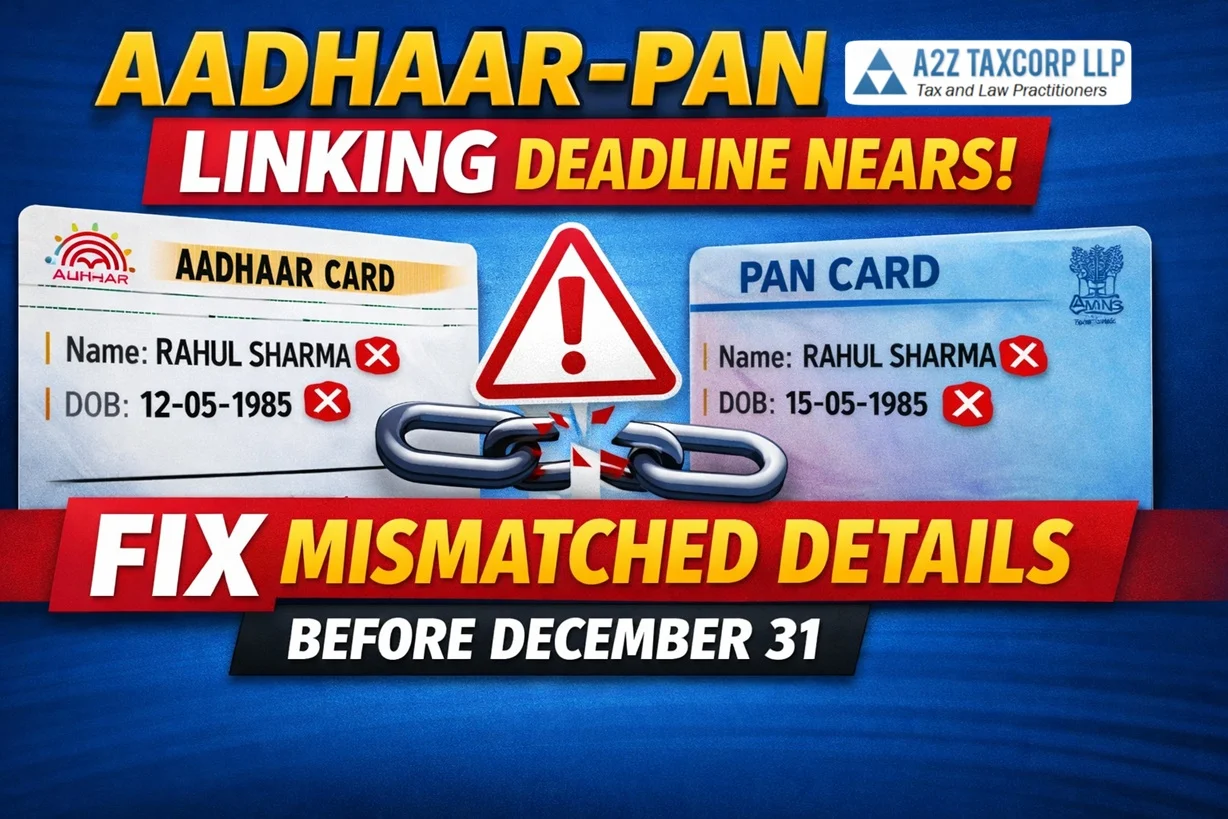
While rare in the age of auto-filled forms, ensure you are filing for the correct person. If you manage taxes for family members, mixing up profiles is a possibility. Ensure your Aadhaar and PAN are linked, as unlinked PANs can lead to the return being treated as invalid.
Not Verifying the Revised ITR
Many taxpayers believe that hitting “submit” is the end of the road. It isn’t. If you do not e-verify the revised return within 30 days of submission, it will be treated as if you never filed it. The department will proceed with processing your original return, which still contains the errors you tried to fix.
Overwriting Previous ITR Without Proper Corrections
When you select “Revised Return,” you are telling the system, “Discard the old one, use this one.” Therefore, the revised return must be a complete return, not just a supplement.
- Mistake: Only entering the new income you forgot.
- Correct Way: Entering your total income (original income + new income).
You must re-enter all data as if you are filing a fresh, complete return for the year.
Impact of Filing a Revised ITR
What happens after you click submit?
Refund Adjustments
If your revision results in a higher refund, the processing time might reset. The department will validate the new claim. If the revision results in a lower refund (or tax due), you will need to pay the difference along with any applicable interest under Section 234B/C before filing.
Tax Credits and TDS Reconciliation
Filing a revised ITR triggers a fresh reconciliation of your tax credits. The system will match your claims against the updated Form 26AS. This is excellent for clearing up past mismatches, but it also means the department will take a fresh look at your file.
Avoiding Penalties and Interest
The biggest impact is relief. By voluntarily correcting an error, you show intent to comply. This drastically reduces the chances of the tax officer viewing a mistake as “concealment of income,” protecting you from harsh penalties.
Tools and Resources for Easy Filing
You don’t have to go it alone. Several resources can simplify this process.
Income Tax Portal Tutorials
The government’s e-filing portal has a “Help” section with user manuals and video tutorials specifically for filing revised returns. These are free and authoritative sources of information.
E-filing Apps and Software
Third-party platforms like ClearTax, Tax2Win, and Quicko offer user-friendly interfaces that often explain sections more simply than the government portal. They can help import data from your previous filing to make the revision process faster.
Helpdesk and Grievance Redressal
If you are stuck on a technical error (like the portal not allowing you to select Section 139(5)), utilize the “Grievance” tab on the portal. The helpdesk support numbers are also available for real-time assistance during business hours.
Don’t Let the Clock Run Out
Financial prudence isn’t just about making money; it’s about reporting it correctly. The Revised ITR is a powerful tool designed to protect honest taxpayers from the consequences of genuine mistakes. Whether it is a forgotten savings account interest or a missed insurance deduction, the ability to correct your record is invaluable.
However, the December 31st deadline is non-negotiable. Procrastination is the enemy of compliance. By waiting until the final hours, you risk technical failures and stress that could lead to further errors.
Take a moment today to review your originally filed ITR. Compare it against your bank statements and AIS one last time. If you find a discrepancy, log in and fix it immediately. A clean financial record is the foundation of a stress-free financial future.
Need help reviewing your tax return or unsure if you need to revise? Don’t leave it to chance. Sign up for our expert tax review service today and ensure your finances are 100% compliant before the deadline hits.
Frequently Asked Questions (FAQ)
What is a revised ITR and who can file it?
A revised ITR is a facility provided under Section 139(5) of the Income Tax Act that allows taxpayers to correct errors or omissions in their originally filed return. Anyone who has filed an original return (either on time or belatedly) can file a revised ITR.
What is the last date to file a revised ITR?
The deadline to file a revised ITR is December 31st of the relevant Assessment Year, or before the completion of the assessment by the tax department, whichever is earlier. For example, for FY 2023-24, the deadline is December 31, 2024.
Can I revise ITR multiple times?
Yes, there is no specific limit on the number of times you can revise your return. You can file a revised ITR multiple times, provided each revision is filed within the valid deadline (December 31st of the Assessment Year). However, excessive revisions may attract the attention of the tax department.
What happens if I miss the revised ITR deadline?
If you miss the December 31st deadline, you can no longer file a revised return under Section 139(5). Your original return will be considered final. To correct errors after this date, you may have to file an “Updated Return” (ITR-U), which allows filing up to 24 months later but requires paying an additional penalty tax of 25% to 50% on the tax due. You cannot file ITR-U to claim a refund or lower your tax liability.
Leave a Reply