

Since 2014, India’s foreign policy has undergone a seismic transformation. Under the leadership of Prime Minister Narendra Modi, the nation has moved away from its traditional stance of cautious non-alignment towards a more assertive, multi-aligned approach. This evolution is most visible in New Delhi’s deepening embrace of the United States and its allies, marking a distinct departure from the Nehruvian era.
While this pivot has undoubtedly elevated India’s stature on the global diplomatic stage—securing access to high-end technology, defence partnerships, and a seat at the high table of global governance—it has not been without consequences. The most significant friction point lies in the intricate triangle between New Delhi, Washington, and Tehran.
As geopolitical pressures mount, particularly regarding American sanctions and trade policies targeting Iran, India finds itself navigating a precarious path. The strategic convergence with the West has forced New Delhi to curtail its historical ties with Tehran, triggering a ripple effect through the Indian economy.
This article explores whether the diplomatic gains of the last decade have come at a tangible economic cost. We will examine the decline in traditional trade markets, the impact of tariff threats, and the broader debate regarding India’s strategic autonomy in an increasingly polarised world.
How India’s Foreign Policy Has Shifted Since 2014
To understand the current economic dilemmas, one must first appreciate the magnitude of the diplomatic shift. Pre-2014, India maintained a delicate balance, often prioritising solidarity with the ‘Global South’ and maintaining robust ties with nations like Iran and Russia, even when it irked Western powers.
The Tilt Towards the West
Since the change of government in 2014, there has been a palpable acceleration in India-US relations. Washington is no longer just a trading partner; it is a “Comprehensive Global Strategic Partner”. This relationship is driven by shared concerns over Chinese expansionism and a desire for deeper defence and technology collaboration.
Simultaneously, India has de-hyphenated its relationship with Israel and Palestine, bringing its ties with Tel Aviv out of the closet. This move signalled a pragmatic prioritisation of security and technology over traditional ideological stances.
New Alliances: I2U2 and IMEC
The shift is cemented by India’s participation in new minilateral groupings. The formation of the I2U2 group—comprising India, Israel, the UAE, and the US—is often dubbed the “West Asian Quad”. Furthermore, the ambitious India-Middle East-Europe Economic Corridor (IMEC), announced at the G20 summit, places India firmly within a US-backed economic architecture designed to counter China’s Belt and Road Initiative.
While these alliances promise long-term connectivity and investment, they also implicitly require India to align its regional policies closer to Western interests, often at the expense of other historical partners.
The US–Iran Tariff Policy and India’s Trade Dilemma
The economic friction points emerged sharply during the Trump administration and have lingered since. The US decision to withdraw from the Joint Comprehensive Plan of Action (JCPOA) and reimpose sanctions on Iran placed India in a direct line of fire.
The ‘Zero Imports’ Ultimatum
Washington’s demand that buyers reduce Iranian oil imports to zero or face secondary sanctions was a critical turning point. Historically, Iran was one of India’s top energy suppliers, offering favourable credit terms and insurance arrangements that Western suppliers rarely matched.
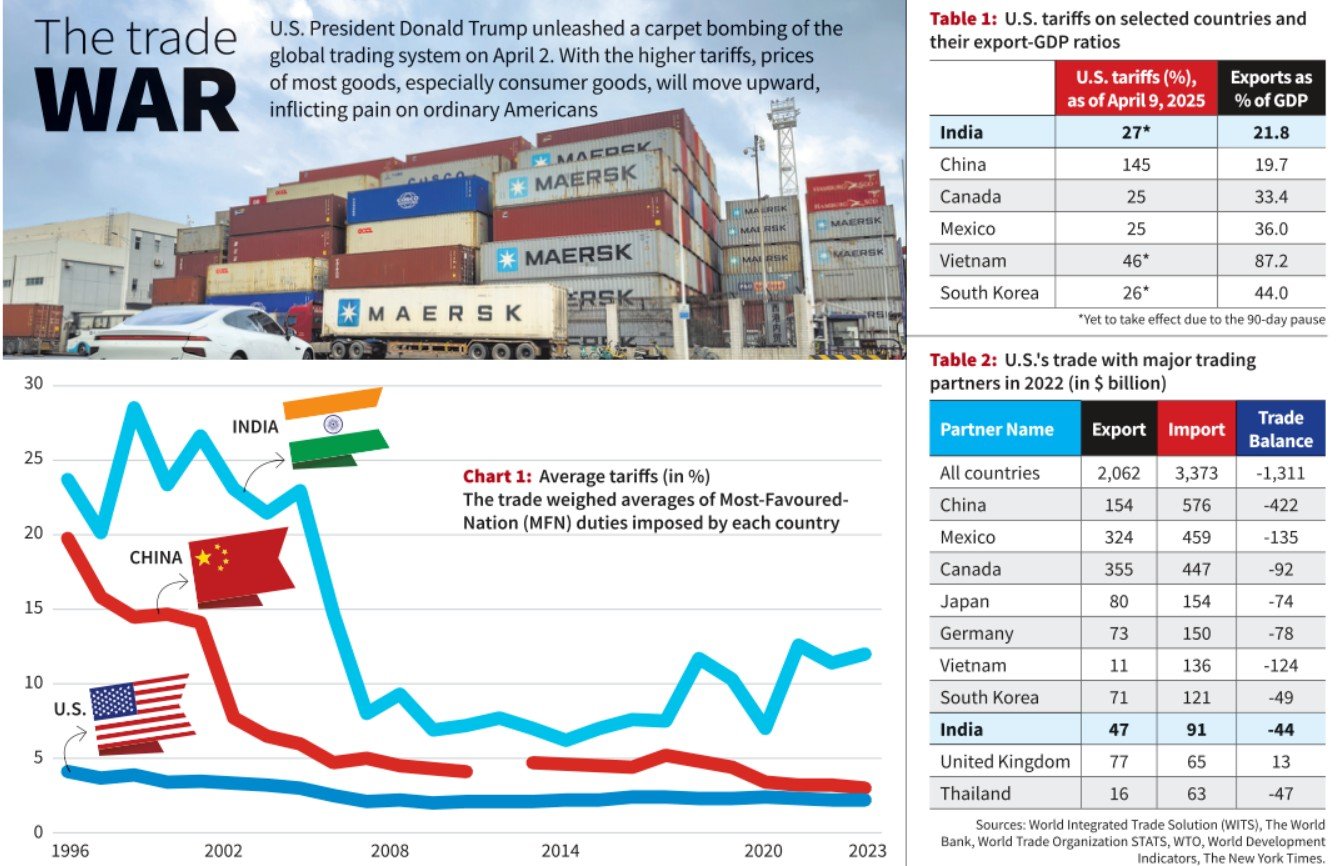
Beyond oil, the US trade policy under the Trump administration utilised tariffs as a blunt diplomatic tool. The threat of a 25% tariff on countries trading with blacklisted nations, combined with the withdrawal of the Generalised System of Preferences (GSP) status for India, created a hostile trading environment.
The Payment Crisis Mechanism
The most immediate economic casualty was the rupee-rial trade mechanism. India used to pay for Iranian oil in rupees, which Iran then used to purchase Indian goods—specifically basmati rice, tea, sugar, and pharmaceuticals. When India ceased oil imports to comply with US sanctions, Iran’s rupee reserves depleted.
Consequently, Indian exporters faced a crisis. Without oil payments replenishing the rupee coffers, Iran’s ability to import Indian commodities collapsed. This was not a market failure, but a policy-induced blockage directly linked to India’s alignment with US dictates.
Economic Impacts on Indian Exports
The compliance with US sanctions has resulted in quantifiable losses for Indian exporters, affecting sectors that are labour-intensive and crucial for the rural economy.
Collapse in Trade Volumes
The statistics paint a stark picture. Bilateral trade between India and Iran, which stood at approximately $17 billion in 2018-19, plummeted to under $5 billion in subsequent years. The cessation of oil imports accounts for the bulk of this, but the non-oil export decline is equally concerning.
The Burden on Agriculture and MSMEs
The agricultural sector has borne the brunt of this geopolitical realignment.
- Basmati Rice: Iran was historically the largest importer of Indian basmati rice, accounting for nearly a third of total exports. The payment crisis left exporters with unpaid dues amounting to millions of rupees and a shrinking market.
- Tea and Sugar: Similar trends were observed in the tea industry, where orthodox tea producers looked to Iran as a vital market.
- Pharmaceuticals: While humanitarian goods are technically exempt from sanctions, the banking channels required to process payments have been stifled, making trade difficult for Indian pharmaceutical MSMEs (Micro, Small and Medium Enterprises).
These losses highlight a critical vulnerability: while the strategic pivot benefits high-tech and defence sectors, the costs are often paid by farmers and small manufacturers who lose access to established markets.
Strategic Trade Relations: Iran vs Israel
A comparative analysis of India’s trade relations with Iran and Israel offers insight into the government’s shifting priorities.
The Decline of the Gateway to Central Asia
Iran was not just an energy supplier; it was India’s gateway to Afghanistan and Central Asia via the Chabahar Port. This project was India’s answer to Pakistan’s denial of transit rights and China’s Gwadar port. However, the fear of US sanctions slowed down the development of Chabahar significantly. The economic potential of accessing Central Asian markets has been hampered by the reluctance to aggressively pursue the project in the face of American disapproval.
The Rise of the Tech Partnership
In contrast, trade with Israel has flourished, focusing on diamonds, defence equipment, agriculture technology, and cyber-security. This relationship aligns with India’s desire to modernise its military and economy. The trade value with Israel has grown, but the nature of this trade is fundamentally different. It is capital-intensive and strategic, whereas trade with Iran was commodity-based and mass-employment supporting.
This reflects a broader foreign policy goal: prioritising partnerships that offer technological leverage over those that offer basic resource security.
Domestic Backlash and Political Debate
The economic fallout of these foreign policy choices has not gone unnoticed within India’s domestic political sphere.
The Exporters’ Grievance
Trade bodies and export promotion councils have repeatedly flagged the issue of ‘sovereign risk’ in international trade. When foreign policy shifts abruptly to accommodate a third country (the US), exporters argue that they pay the price without adequate compensation or safety nets. The uncertainty regarding payment mechanisms with sanctioned countries deters future contracts, leading to long-term market loss.
Political Discourse on Sovereignty
Opposition parties and economic critics have leveraged these trade losses to question the government’s strategy. The argument posed is straightforward: Is the government prioritising Washington’s approval over the livelihood of Indian farmers and traders?
Critics argue that by zeroing out Iranian oil imports, India not only lost a cheap energy source—contributing to domestic inflation—but also surrendered a significant export market. The debate centres on whether the ‘strategic partnership’ with the US is becoming a one-way street where India makes economic sacrifices for American geopolitical goals.
Is Strategic Autonomy at Risk?
India has long prided itself on ‘Strategic Autonomy’—the ability to take decisions based solely on national interest, free from external pressure. The divergent approaches to Iran and Russia highlight the complexities of this doctrine today.
The Russia vs. Iran Double Standard
Following the invasion of Ukraine, India defied Western pressure and continued—even increased—its purchase of Russian oil. This demonstrated that New Delhi is capable of withstanding US pressure when the economic stakes (energy security and defence supplies) are high enough.
However, the capitulation regarding Iran raises questions. Why was autonomy exercised for Moscow but not for Tehran? Analysts suggest the difference lies in the geopolitical weight of the partners and the specific nature of US leverage. The inconsistency suggests that India’s strategic autonomy is becoming situational rather than absolute.
Balancing Energy Security
The decision to align with US sanctions on Iran exposed India to energy price volatility. By cutting off a nearby, cheap source of crude, India increased its reliance on other suppliers, including the US itself. While this strengthened the Indo-US energy partnership, it arguably reduced India’s diversification and bargaining power in the global energy market.
Possible Paths Forward
As global supply chains restructure and geopolitical blocs harden, India must find a way to mitigate the economic costs of its foreign policy shifts.
Diversifying Trade Partners
To reduce the impact of tariffs and sanctions, India is aggressively pursuing Free Trade Agreements (FTAs) with the UK, the EU, and Australia. Diversification is the primary hedge against the loss of traditional markets like Iran. By opening new avenues for basmati rice and textiles, the government hopes to offset the losses incurred in West Asia.
Leveraging the Global South
India’s leadership within the G20 and its involvement in BRICS (which recently invited Iran to join) offers a platform to renegotiate trade terms. India could push for local currency settlement systems that bypass the US dollar, insulating bilateral trade from Western sanctions. The recent push for internationalising the rupee is a step in this direction.
Strengthening Domestic Competitiveness
Ultimately, the best defence against external trade pressure is internal strength. The ‘Make in India’ initiative and Production Linked Incentive (PLI) schemes aim to make Indian manufacturing globally competitive. If Indian goods are indispensable, foreign policy shifts become less damaging.
Future Outlook
The shift in India’s foreign policy since 2014 has undeniably repositioned the country as a leading global player. The alignment with the US and Israel has unlocked access to critical technologies and security frameworks essential for a 21st-century superpower. However, this ascent has come with a price tag attached.
The erosion of trade with Iran serves as a stark reminder that diplomatic realignments have real-world economic consequences. The farmers in Punjab and the tea estate owners in Assam have felt the tremors of decisions made in Washington and New Delhi.
Moving forward, Indian policymakers face the unenviable task of balancing these competing interests. They must ensure that the pursuit of global strategic partnerships does not cannibalise the traditional economic relationships that sustain vital sectors of the domestic economy. The challenge for the next decade will be to transform ‘Strategic Autonomy’ from a diplomatic buzzword into an economic reality that protects Indian interests against the vagaries of global power politics.
If you are an exporter or business owner navigating these shifting geopolitical tides, staying informed is your best defence. Subscribe to our newsletter for weekly insights on global trade policies and their impact on the Indian economy.
Leave a Reply