

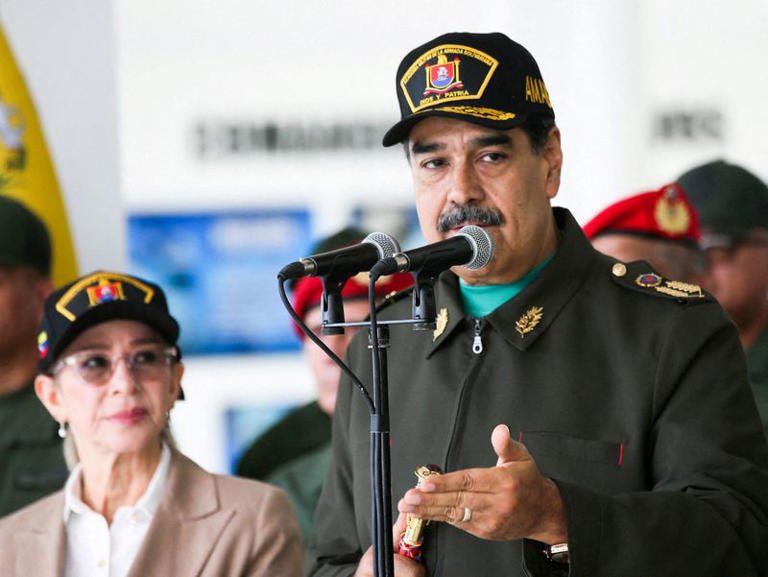
History rarely offers the spectacle of a foreign head of state standing before a U.S. judge, stripping away the veneer of diplomatic immunity to answer for criminal charges. Yet, that is precisely the scene unfolding in the Southern District of New York. The arraignment of Nicolás Maduro and his wife, Cilia Flores, marks a seismic shift in international law, drug enforcement policy, and geopolitical relations.
For years, the U.S. government has labeled the Venezuelan leadership as a criminal enterprise masquerading as a government. Now, prosecutors have the opportunity—and the burden—to prove those allegations in open court. This is not merely a political dispute played out on a legal stage; it is a complex narcotics trafficking case with implications that will ripple through Washington, Caracas, and beyond.
As the world watches the “Manhattan Trial of the Century,” understanding the legal mechanics, the specific charges, and the defense strategies is essential. This is no ordinary prosecution. It involves a collision of constitutional rights, international sovereignty, and the gritty details of a trans-continental drug trade. Here is everything you need to know as the case against Venezuela’s power couple begins.
How the Case Came to Manhattan
The arrival of Nicolás Maduro and Cilia Flores in New York was the culmination of a high-stakes, long-game strategy by U.S. law enforcement and intelligence agencies. While indictments had been collecting dust in the Southern District of New York for years, the physical capture of the defendants required a precise and risky special operation.
According to emerging reports, U.S. forces, specifically Delta Force operators, executed a raid in Caracas that had been rehearsed extensively. Intelligence indicated that Maduro rotated between several safe houses to avoid detection. To prepare, U.S. troops reportedly practiced breaching steel doors and navigating compound layouts in a full-scale replica built in Kentucky. This preparation allowed for a rapid extraction that caught the Venezuelan security apparatus off guard.
This operation did not happen in a vacuum. It rests on a foundation of legal work dating back over a decade. The U.S. Department of Justice has long treated the Venezuelan executive branch not as a sovereign entity, but as the “Cartel of the Suns” (Cartel de los Soles)—a reference to the stars worn on the uniforms of high-ranking Venezuelan military officials involved in the drug trade. The transfer of Maduro and Flores to U.S. soil transforms these long-standing dossiers from intelligence reports into active evidence.
Understanding the Charges
The indictment unsealed against Maduro and Flores is exhaustive, painting a picture of a state apparatus entirely co-opted for criminal profit. The core charge is narco-terrorism conspiracy, a statute that carries a mandatory minimum of 20 years and a maximum penalty of life in prison.
Federal prosecutors allege that Maduro and Flores conspired to “flood the United States with cocaine” as a weapon of asymmetric warfare. The charges detail a sophisticated supply chain where the Venezuelan military provided security and transport for massive shipments of cocaine sourced from Colombia.
The Criminal Partnerships
A central pillar of the prosecution’s case is the alleged partnership between the Venezuelan state and designated terrorist organizations. The indictment outlines collaboration with:
- FARC (Revolutionary Armed Forces of Colombia): Prosecutors argue Maduro provided safe haven and weapons to FARC dissidents in exchange for drug proceeds.
- ELN (National Liberation Army): Another Colombian rebel group allegedly utilized to secure trafficking routes.
- Tren de Aragua: Recent intelligence suggests connections to this transnational criminal gang to facilitate logistics and enforcement.
Beyond drug trafficking, the couple faces charges of possession of machine guns and destructive devices in furtherance of drug trafficking crimes. If convicted on the top counts, sentencing guidelines suggest they could spend the rest of their lives in a U.S. federal prison.
The Key Players
While the indictment names several defendants, three figures stand at the epicenter of this legal earthquake.
Nicolás Maduro
Formerly a bus driver and union leader who ascended to the presidency after the death of Hugo Chávez, Maduro is painted by the defense as a legitimate president protected by international law. To the prosecution, he is the “Pranato”—the crime boss—who prioritized personal enrichment over the welfare of a starving nation. His role in the indictment is that of the ultimate authority who sanctioned the drug trade.
Cilia Flores
Known in Venezuela as the “First Combatant,” Flores is far more than a traditional First Lady. Prosecutors portray her as a potent political operator who placed family members in key government positions to facilitate illicit activities. Her influence within the National Assembly and the judicial system is expected to be a key component of the evidence regarding the conspiracy’s scope.
The Co-Defendants
The case extends to a broad network of alleged co-conspirators, including military generals and intelligence chiefs. Their testimony—or lack thereof—could make or break the case. If lower-level defendants choose to cooperate with U.S. prosecutors in exchange for leniency, they could provide the “smoking gun” testimony needed to directly link Maduro to specific drug shipments.
The First Court Appearance
The initial arraignment on January 5, 2026, offered the world its first glimpse of the fallen leaders since their extraction. The atmosphere inside the Manhattan federal court was tense, with security measures exceeding those used for past high-profile terror trials.
Maduro and Flores both entered pleas of not guilty. Despite the gravity of the situation, reports from the courtroom describe a defiant Maduro. He utilized his time before the judge to declare that he had been “kidnapped” and asserted his status as the sitting President of Venezuela. Flores appeared visibly shaken but remained silent as her attorneys entered her plea.
This first hearing set the tone for the proceedings: the defense will lean heavily on political narratives and jurisdictional challenges, while the prosecution intends to treat this as a standard, albeit massive, organized crime trial.
The Legal Battle Ahead
Now that the arraignment is over, the real legal warfare begins. The defense strategy is expected to focus on three main pillars, each presenting unique challenges for the court.
Sovereign Immunity
The most significant hurdle is the question of sovereign immunity. Generally, sitting heads of state are immune from prosecution in foreign courts. However, the U.S. government does not recognize Maduro as the legitimate president, a stance reinforced by various administrations. The defense will argue that regardless of U.S. recognition, Maduro was the de facto ruler. The prosecution will counter that narco-terrorism is an act outside the scope of official state duties and therefore not protected by immunity.
Discovery and Evidence
The volume of evidence is expected to be overwhelming. Prosecutors will likely rely on:
- Classified Intelligence: Wiretaps, satellite imagery, and communication intercepts.
- Cooperating Witnesses: Former cartel members or Venezuelan officials who have defected.
- Financial Records: Tracking the flow of money through shell companies and international banks.
The defense will aggressively demand access to this evidence, likely leading to battles over the Classified Information Procedures Act (CIPA), which governs how secret information is handled in court.
Speedy Trial Motions
Given the complexity of the case, a “speedy trial” is unlikely. Legal experts project that pre-trial motions could drag on for over a year. The defense may push for a dismissal based on the circumstances of the capture, arguing that the extradition (or “rendition”) violated due process.
Why the Southern District of New York?
The choice of venue is no accident. The Southern District of New York (SDNY), often called the “Sovereign District,” possesses a legendary reputation for handling complex international prosecutions. From terrorism cases post-9/11 to the prosecution of El Chapo, the SDNY has the resources and the expertise to manage a trial of this magnitude.
Judge Alvin K. Hellerstein, engaging with the procedural expectations, will be tasked with keeping the trial focused on criminal statutes rather than allowing it to become a political circus. The court’s proximity to the United Nations and the global financial center further underscores the symbolic weight of holding the trial in Manhattan.
Geopolitical Implications
The trial has ignited a firestorm in international relations. Supporters of the prosecution view it as a triumph of justice and a warning to other authoritarian leaders involved in criminal enterprises. Critics, including allies of Venezuela and pundits in the region, argue this is a violation of national sovereignty and a return to “gunboat diplomacy.”
The implications extend to international law. If the U.S. successfully prosecutes a foreign leader it captured via a military raid, it sets a controversial precedent regarding the reach of U.S. law enforcement. It forces a debate on the balance between holding leaders accountable for criminal acts and respecting the boundaries of the Westphalian nation-state system.
The War for Public Perception
While the legal battle wages in the courtroom, a parallel war is being fought in the media. In the United States, the narrative is focused on “justice for victims of the drug trade” and the liberation of Venezuela from a “criminal regime.”
Conversely, the defense team and Maduro’s remaining loyalists are crafting a narrative of imperialism. They are framing the trial as a political persecution designed to control Venezuela’s vast oil reserves. Public protests have already erupted in various capitals, highlighting the deep divide in global opinion. The jury selection process will be arduous, as finding impartial jurors who have not been influenced by this pervasive media coverage will be a monumental task for the defense and prosecution alike.
What to Watch Next
As the case moves toward trial, legal observers should keep an eye on several key milestones:
- The Immunity Ruling: The judge’s decision on whether to dismiss the case based on sovereign immunity will be the first major test.
- Severance Motions: Will Maduro and Flores be tried together, or will their lawyers try to separate the cases to avoid the “spillover prejudice” of being tried as a couple?
- Witness Lists: The unveiling of the prosecution’s witness list will reveal which former allies have flipped on Maduro.
Broader Significance
The Manhattan Trial of the Century is more than just a drug case; it is a stress test for the international rule of law. A conviction would validate the U.S. strategy of using criminal indictments as a tool of foreign policy. An acquittal, or a dismissal based on immunity, would be a staggering embarrassment for U.S. authorities and could reshape diplomatic norms.
Regardless of the verdict, the image of Nicolás Maduro in a U.S. federal court has already changed history. It serves as a stark reminder that in the modern era, the line between political power and criminal liability is becoming increasingly thin.
Conclusion
The prosecution of Nicolás Maduro and Cilia Flores is a saga that combines the tension of a spy thriller with the procedural density of a constitutional crisis. As evidence is presented and arguments are made, the world will see the inner workings of an alleged narco-state laid bare. The outcome will likely determine the future of U.S.-Latin American relations for decades to come.
Stay informed on every motion, ruling, and revelation in this historic case. Sign up for our legal affairs newsletter today to get breaking updates delivered straight to your inbox.
Frequently Asked Questions
What are the narco-terrorism charges against Nicolás Maduro?
Maduro is charged with participating in a narco-terrorism conspiracy, conspiring to import cocaine into the United States, and using machine guns and destructive devices to further these crimes. Prosecutors allege he led the “Cartel of the Suns” to weaponize cocaine trafficking against the U.S.
Why is Maduro on trial in Manhattan?
The case is being handled by the Southern District of New York (SDNY) because the alleged crimes—specifically the importation of narcotics—violate U.S. federal laws and have a direct impact on New York. The SDNY has a long history of prosecuting international terror and drug cases.
Can Maduro claim presidential immunity in a U.S. court?
His defense team will certainly try. However, the U.S. government does not recognize Maduro as the legitimate president of Venezuela, which weakens his claim to head-of-state immunity. Furthermore, prosecutors argue that drug trafficking is not an official act of state and therefore not protected.
What happens next in the Maduro and Cilia Flores case?
The next phase involves pre-trial motions. The defense will likely file motions to dismiss based on immunity and challenge the legality of their capture. Both sides will also engage in “discovery,” where the prosecution must share its evidence with the defense. A full trial is likely months, if not more than a year, away.
Leave a Reply