

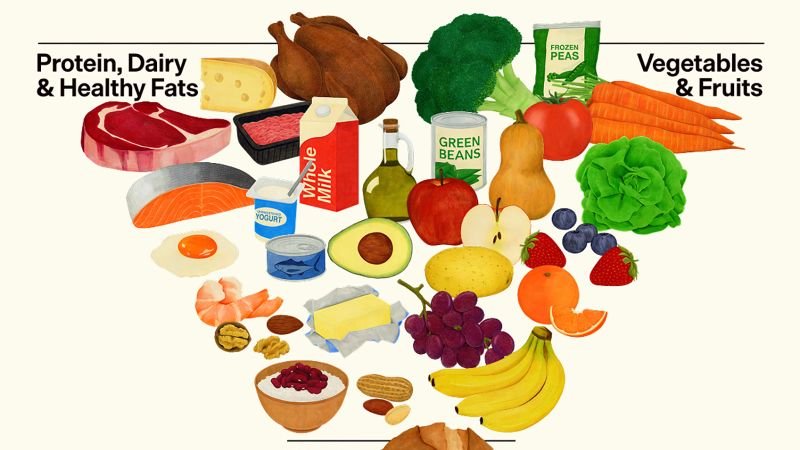
Nutrition advice often swings like a pendulum. For decades, Americans were told to fear fat, prioritize grains, and count every calorie. Then came the waves of low-carb, keto, paleo, and plant-based movements, each claiming the definitive path to health. But the release of the 2026 Dietary Guidelines marks one of the most significant shifts in federal nutrition policy in over forty years.
At the center of this shift is what is being colloquially termed the “RFK Jr. Food Pyramid.”
This new framework is already generating intense debate across medical, political, and public spheres. Unlike subtle updates of the past, this model proposes a fundamental restructuring of how Americans should view their plates. It moves away from the agricultural-centric models of the 20th century and leans heavily into metabolic health and food quality.
So, what exactly has changed, and does this new pyramid actually align with science? Here is a deep dive into the 2026 guidelines and the five critical takeaways you need to understand.
What Is the RFK Jr. Food Pyramid?
The 2026 model is a departure from the “MyPlate” graphic and the grain-heavy pyramids of the 1990s. While previous guidelines were often criticized for being influenced by food industry lobbying—specifically grain and sugar producers—this new framework explicitly prioritizes metabolic health and whole food consumption.
The core philosophy behind this model is “food as medicine.” It posits that the chronic disease epidemic in America is largely driven by ultra-processed foods, seed oils, and added sugars, rather than simply a lack of willpower or exercise.
Structurally, the pyramid has been inverted in some sections. The wide base of carbohydrates that defined the 1992 pyramid is gone. In its place is a foundation built on high-quality proteins and vegetables, with a strong emphasis on sourcing and processing levels rather than just macronutrient ratios.
5 Key Things You Need to Know
To navigate this new landscape, it helps to break down the specific recommendations that are changing the way we look at nutrition.
1. Protein Takes Center Stage
For years, protein was just one slice of the pie, often secondary to grains and vegetables. The 2026 guidelines elevate protein to a primary position. The rationale is that adequate protein intake is essential for satiety, muscle maintenance, and metabolic function, particularly as the population ages.
This isn’t just about steak dinners. The guidelines advocate for a “bioavailable” protein approach. While plant proteins are included, there is a distinct shift back toward acknowledging the nutritional density of animal proteins like eggs, dairy, and ethically raised meats. This aligns with recent nutritional science suggesting that the recommended daily allowance (RDA) for protein has been too low for optimal health, especially for muscle retention in older adults.
2. Ultra-Processed Foods Are Explicitly Discouraged
Perhaps the most aggressive stance in the new pyramid is the war on ultra-processed foods (UPFs). Previous guidelines suggested limiting “added sugars” or “saturated fats,” but rarely distinguished between a baked potato and potato chips, or a steak and a processed hot dog, beyond basic nutrient panels.
The RFK Jr. model draws a hard line. It explicitly discourages foods containing industrial additives, high-fructose corn syrup, and artificial preservatives. The guidelines link high consumption of UPFs directly to the metabolic crisis—including soaring rates of obesity, type 2 diabetes, and autoimmune conditions. This push for label transparency aims to make consumers aware that “low calorie” does not always equal “healthy” if the food is chemically engineered.
3. Carbohydrates Are Reframed, Not Eliminated
This is not a strict keto or carnivore diet, despite what some headlines might suggest. However, carbohydrates have been significantly reframed. The days of 6-11 servings of bread, cereal, and pasta are over.
The new focus is on quality over quantity. Whole, cellular carbohydrates—like fruits, root vegetables, and legumes—are encouraged. Acellular, refined carbohydrates—like flour-based products and sugars—are pushed to the “limit” tip of the pyramid. The guidelines explain the glycemic impact of food, teaching Americans that keeping blood sugar stable is a key pillar of long-term health.
4. Fats Are No Longer the Villain
For decades, the “low-fat” dogma ruled American nutrition. The 2026 guidelines effectively bury that era. Fats are no longer vilified; in fact, healthy fats are considered essential.
The distinction here is crucial. The guidelines emphasize natural fat sources—avocados, olive oil, butter, tallow, and nuts—while cautioning against industrial seed oils (like soybean and canola oil), which the new framework argues are inflammatory when consumed in large quantities. This reassessment challenges the lipid hypothesis that dominated the late 20th century, acknowledging that dietary fat is necessary for hormone production and brain health.
5. Food Quality Over Calorie Counting
Finally, the new pyramid attempts to kill the “calories in, calories out” (CICO) obsession. While energy balance still matters, the new philosophy argues that a calorie from a donut affects the body differently than a calorie from an egg.
By focusing on nutrient density, the guidelines aim to solve the hunger problem. The theory is that by eating real, minimally processed foods, the body’s natural satiety signals will function correctly, leading to natural weight management without the need for obsessive tracking.
Why the New Guidelines Are Controversial
Change rarely comes without friction. The RFK Jr. Food Pyramid has faced significant pushback from various sectors.
Scientific experts are divided. While many metabolic health practitioners applaud the shift, others argue that the demonization of seed oils and the heavy emphasis on red meat lacks long-term, randomized clinical trial evidence. Critics worry that the guidelines downplay the risks of saturated fat and cholesterol.
There is also institutional and political pushback. The agricultural lobby, which relies heavily on subsidies for corn, soy, and wheat, stands to lose significantly if Americans shift their buying habits. Furthermore, the explicit labeling of certain processed foods as “harmful” has drawn legal threats from food manufacturers.
Public confusion is also a risk. After decades of being told to eat low-fat and high-grain, many Americans find this 180-degree turn disorienting. Trust in public health institutions is fragile, and shifting the goalposts this drastically requires careful communication.
How This Food Pyramid Changes Everyday Eating
So, what does this look like on a Tuesday night dinner table?
Under the old model, a “healthy” dinner might have been a large plate of pasta with a small side of chicken and low-fat dressing. Under the 2026 guidelines, that meal flips. The center of the plate becomes a substantial serving of protein (like salmon or steak) and cooked vegetables in butter or olive oil, perhaps with a small side of roasted potatoes or fruit for dessert.
Grocery shopping shifts from the center aisles—where the boxed and bagged foods live—to the perimeter, focusing on produce, meat, dairy, and bulk whole ingredients. Families may need to adjust by cooking more from scratch, as “convenience” foods are largely categorized as items to avoid.
Who Benefits Most From the 2026 Guidelines?
While the guidelines are intended for the general population, certain groups stand to benefit most from this metabolic-focused approach:
- Adults over 40: The emphasis on protein is critical for preventing sarcopenia (muscle loss) and maintaining metabolic rate as we age.
- Children and adolescents: Removing ultra-processed foods and dyes from developing bodies could have profound effects on focus, behavior, and growth.
- People managing obesity or diabetes: The reduction in refined carbs and focus on blood sugar stability directly addresses the root causes of insulin resistance.
What Critics and Supporters Are Saying
Supporters view this as a long-overdue correction. They argue that the obesity epidemic exploded after the introduction of the original low-fat food pyramid, and that a return to whole, ancestral foods is the only way to reverse the trend. They see RFK Jr.’s influence as a disruption of corporate capture in public health.
Critics, including some traditional nutrition organizations, warn of elitism. They argue that fresh meat and produce are expensive, and that demonizing cheap, shelf-stable foods shames low-income families without providing economic solutions. They also express concern that the guidelines dismiss established research on heart disease and saturated fats.
As implementation begins, researchers will be watching closely. The success of these guidelines will ultimately be measured not by debate, but by health outcomes over the next decade.
FAQs
What is the RFK Jr. Food Pyramid?
It is a colloquial term for the new 2026 Dietary Guidelines, which prioritize whole foods, high-quality proteins, and healthy fats while discouraging ultra-processed foods and refined carbohydrates.
How is the 2026 food pyramid different from previous versions?
Unlike the grain-heavy pyramids of the past, the 2026 version limits carbohydrates, removes the “low-fat” recommendation, and places a stronger emphasis on protein and avoiding industrial additives.
Is the RFK Jr. diet scientifically supported?
It is supported by growing research in metabolic health, though it remains controversial. Many studies support limiting processed foods and sugar, but the stance on seed oils and saturated fats is still debated within the medical community.
Should I change my diet based on the 2026 guidelines?
Consulting with a healthcare provider is always best. However, most experts agree that reducing ultra-processed foods and increasing whole food intake is beneficial for almost everyone.
The Future of American Nutrition
The 2026 Dietary Guidelines represent a bold experiment in public health. By shifting the focus from calories to chemistry—and from grains to quality proteins and fats—the “RFK Jr. Food Pyramid” challenges us to rethink our relationship with what we eat.
Whether you fully embrace the new model or take a moderate approach, the core message is undeniable: real food matters. As the debate continues, the best step you can take is to become a more informed consumer. Read labels, prioritize nutrient density, and listen to how your body responds to what you feed it.
Ready to take control of your metabolic health? Download our free “2026 Grocery Guide” to help you navigate the aisles and make the best choices for your family.
Leave a Reply