

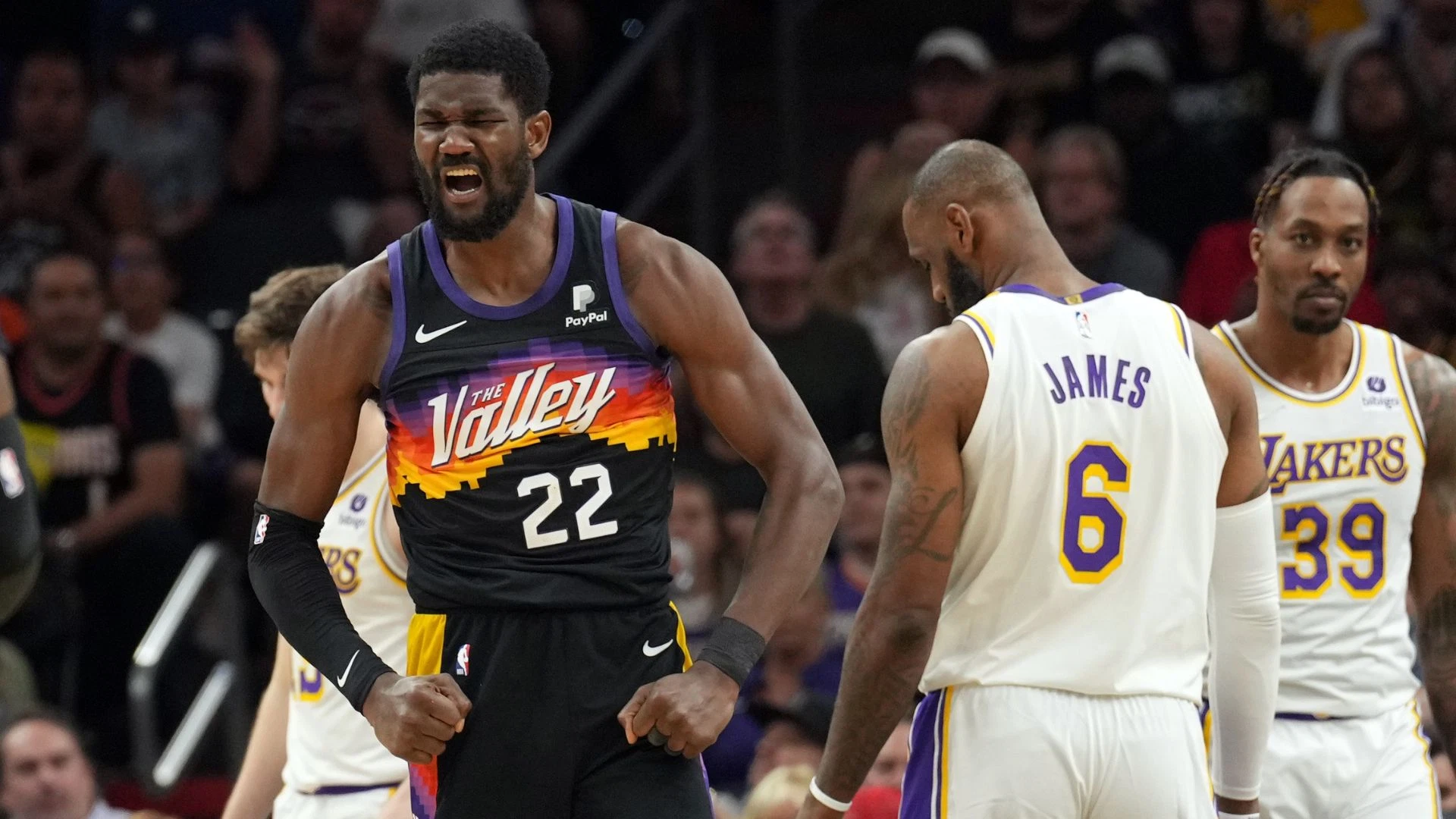
The Smoothie King Center in New Orleans is rarely a welcoming environment for visiting teams, especially when the Lakers come to town. The crowd is loud, the atmosphere is hostile, and the Pelicans usually play with a chip on their shoulder. Yet, what transpired on the court Tuesday night felt less like a typical regular-season grudge match and more like the unveiling of a new NBA superpower.
For weeks, the basketball world has debated the theoretical fit. Could LeBron James, in his twilight prime, coexist with a ball-dominant savant like Luka Dončić? Would Deandre Ayton finally find the consistency that eluded him in Phoenix and Portland? The skepticism was valid. Superteams often look better on paper than they do on hardwood. But the dominant performance in New Orleans didn’t just silence the critics; it offered a terrifying proof of concept for the rest of the Western Conference.
This wasn’t a team figuring things out on the fly. This was a synchronized unit that seemed to understand its hierarchy from the opening tip. The 118-102 victory was a statement, but the final score was the least interesting part of the night. The real story was the seamless integration of three distinct talents into a singular, overwhelming force.
Game Recap: Why the New Orleans Win Matters
It is easy to dismiss a single regular-season win, but context is everything. The Pelicans are a long, athletic, defensive-minded team designed to disrupt the very style of basketball the Lakers are trying to implement. They have wing defenders to throw at scorers and length at the rim.
Despite this, the Lakers controlled the tempo from the first quarter. They jumped out to a 14-point lead early, not through hot shooting, but through methodical execution. The “new” Lakers didn’t rely on isolation brilliance to bail out stagnant possessions. Instead, they generated high-quality looks through rigorous ball movement and decisive actions.
Winning on the road against a potential playoff team validates the preseason hype. It proves that the chemistry isn’t just locker room talk. When the Pelicans made their inevitable run in the third quarter, cutting the lead to six, the Lakers didn’t panic. They simply leaned on their new triumvirate to re-establish dominance.
LeBron James: The Connector
For nearly two decades, LeBron James has been the sun around which his team’s offense orbits. In New Orleans, we saw a different version of the King—LeBron the Connector.
James played off the ball more than we have seen in years, and he looked energized because of it. Liberated from the burden of bringing the ball up every possession, he attacked closeouts with ferocity and acted as the world’s most overqualified screener. His usage rate dipped, but his efficiency skyrocketed.
In the fourth quarter, when the game slowed down, James took control of the decision-making. He didn’t force shots. He manipulated the defense, finding Ayton for easy lobs or kicking it out to Dončić for open threes. His defensive versatility was also on display; without the offensive load, he had the legs to jump passing lanes and battle in the post. This version of LeBron, one who picks his spots with surgical precision, extends his championship window significantly.
Luka Dončić: The Offensive Engine
If LeBron was the connector, Luka Dončić was the engine. The Slovenian superstar dictated the flow of the game with a command that bordered on arrogant. The Pelicans threw double teams, zones, and blitzes at him. None of it mattered.
Dončić’s playmaking was infectious. He found angles that didn’t seem to exist, feeding shooters in the corners and establishing immediate chemistry with the interior bigs. But the most surprising development was how much Luka benefited from LeBron’s gravity.
There were moments in the second quarter where Luka caught the ball on the move, attacking a defense already scrambled by a LeBron drive. It gave him a half-step advantage he rarely enjoys. For a player who creates 90% of his own offense, getting “easy” buckets created by a teammate is a luxury he has never had.
Deandre Ayton: The Missing Interior Piece
Deandre Ayton has often been an enigma—a player with elite physical tools whose motor sometimes runs cold. Against the Pelicans, the motor was redlining.
Ayton provided exactly what the Lakers have desperately needed: a true vertical threat who can anchor a defense without fouling. He finished with a efficient double-double, but his impact went beyond the box score. His screens were solid, freeing up Luka for downhill drives. When the defense collapsed on the guards, Ayton was consistently in the “dunker spot,” ready for the drop-off pass.
Defensively, he deterred rim attacks that usually plague the Lakers’ perimeter defense. He rebounded out of his area, ending Pelicans possessions after one shot. If Ayton can maintain this level of engagement—operating as a finisher rather than demanding post touches—he transforms the Lakers from a good team to a great one.
Why This Trio Works
On paper, putting two ball-dominant creators next to a traditional center sounds like a spacing nightmare. On the court, it looked like a geometry lesson.
The fit works because of IQ. LeBron and Luka are two of the smartest players in history. They understand spacing not just as standing behind the three-point line, but as knowing when to cut, when to screen, and when to clear out.
Ayton complements them perfectly because he doesn’t need the ball to be effective, yet he demands attention. You cannot put a small defender on him, which prevents teams from switching everything. This forces defenses into traditional coverages that Luka and LeBron historically dismantle. They have solved the Lakers’ two biggest legacy issues: lack of secondary playmaking and inconsistent interior scoring.
Managing Usage and Touches
The biggest question mark heading into the season was how Head Coach JJ Redick would manage the egos. The strategy in New Orleans was clear: staggered minutes.
LeBron and Luka started and finished the game together, but for large stretches of the second and third quarters, one sat while the other ran the show. This meant the Lakers had an MVP-caliber playmaker on the floor for all 48 minutes. The Pelicans never got a break.
There was a palpable sense of trust. In one crucial sequence, Luka passed up a contested step-back three to swing the ball to LeBron, who then lobbed it to Ayton. That level of unselfishness is the hallmark of a championship contender.
Defensive Ceiling of the New Lakers
Offense grabs headlines, but defense wins rings. The defensive potential of this group is higher than anticipated. Ayton anchors the paint, allowing the perimeter defenders to press up on shooters.
LeBron, playing free safety, disrupted passing lanes and quarterbacked the backline communication. Luka, often criticized for his defense, looked engaged. He doesn’t need to be a stopper; he just needs to be in the right spot and use his size. With Ayton protecting the rim, Luka was able to gamble a bit more for steals, leading to easy transition points.
Supporting Cast Impact
Stars create gravity, and role players feast on it. The Lakers’ supporting cast had open looks all night. The shooters didn’t have to create off the dribble; they just had to be ready to catch and shoot.
Austin Reaves and the wing rotation thrived with their defined responsibilities. They focused on defense and cutting, knowing the ball would find them. Bench contributions were solid because the second unit was always anchored by either James or Dončić, elevating the floor of the reserves.
Coaching and System Fit
Credit must be given to the coaching staff for implementing a system that caters to dual playmakers. The offensive sets involved a lot of “Pistol” action and double screens, designed to get switches.
Mid-game adjustments were swift. When New Orleans tried to go small to run Ayton off the floor, the Lakers countered by pounding the ball inside, punishing the mismatch rather than subbing Ayton out. It showed a commitment to their identity rather than reacting to the opponent.
Western Conference Implications
The West is a gauntlet. You have the champions in Denver, the youthful energy of OKC, and the defensive size of Minnesota. This win puts the conference on notice.
The Lakers now present a unique matchup problem. They have the size to bang with Denver and Minnesota, but the perimeter creation to keep up with the guards of OKC. There isn’t another team in the conference that can field two top-five playmakers simultaneously. They look ready for playoff-style basketball in November, which is a scary thought for the rest of the league.
Overreactions vs. Real Signals
Can we declare them champions after one game? No. There were still turnovers born of miscommunication. The transition defense was lazy at times.
However, the chemistry signals are real. You can fake effort, but you can’t fake the intuitive passing we saw between Luka and LeBron. The joy they played with suggests buy-in. The areas needing refinement—specifically rotation timing and transition defense—are fixable. The foundation is rock solid.
What This Win Means for the Championship Window
The Lakers have officially pried their championship window wide open. LeBron’s timeline is urgent, but Luka’s presence ensures the team remains competitive for the next decade.
This win signals that the Lakers are “built for June.” Half-court execution becomes vital in the playoffs when the game slows down. In James and Dončić, the Lakers have two masters of the half-court game. They don’t need to run you out of the gym; they can dissect you surgically.
The Evolution of Purple and Gold
The win in New Orleans wasn’t just a victory; it was a revelation. It marked the moment the Lakers stopped experimenting with rosters and started evolving.
The James-Dončić-Ayton trio changes the calculus of the Western Conference. It forces opponents to pick their poison. Do you double Luka and leave LeBron open? Do you stay home on shooters and let Ayton dominate the paint? There are no good answers.
This is the start of a new era. If they stay healthy, the road to the NBA Finals goes through Los Angeles.
Ready to stay ahead of the game?
Don’t miss a single breakdown of the Lakers’ season. Subscribe to our newsletter today for exclusive analysis, trade rumors, and post-game insights delivered straight to your inbox.
Frequently Asked Questions
How did the James-Dončić-Ayton trio perform against the Pelicans?
They were dominant. The trio combined for efficient scoring and controlled the tempo, showing immediate chemistry in a 118-102 road victory.
Can LeBron and Luka coexist as primary ball-handlers?
Yes. By staggering minutes and sharing playmaking duties, they kept the offense flowing for 48 minutes without stepping on each other’s toes.
What role does Deandre Ayton play in the new Lakers era?
Ayton serves as the defensive anchor and primary rim runner. His ability to finish lobs and protect the paint balances the perimeter dominance of James and Dončić.
Are the Lakers real title contenders in 2026?
Based on their performance against a playoff-caliber Pelicans team, the Lakers possess the star power, size, and IQ necessary to contend for a championship immediately.
Leave a Reply