

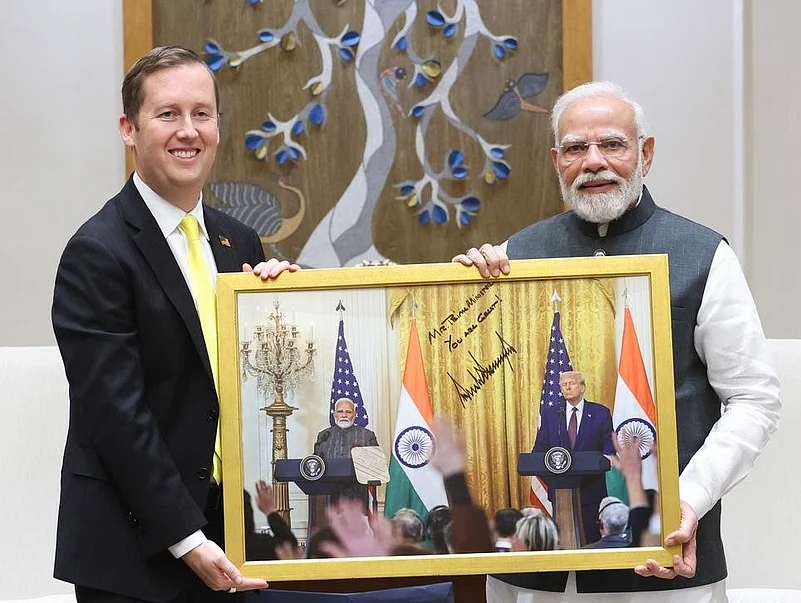
In the complex theatre of international diplomacy, the most influential players are often those operating just outside the glare of the flashbulbs. While presidents and prime ministers shake hands for the cameras, it is the strategists, the backchannel negotiators, and the trusted advisors who truly shape the contours of global relationships.
Recently, a new name has emerged at the forefront of US foreign policy discussions, specifically regarding the critical corridor between Washington and New Delhi: Sergio Gor.
As Donald Trump continues to exert significant influence over the Republican party and American conservative foreign policy, his circle of advisors remains a subject of intense scrutiny. Sergio Gor has risen within these ranks not merely as a loyalist, but as a key architect of strategic partnerships. His sudden spotlight is no accident; it signals a deliberate shift in how the Trump camp approaches one of the 21st century’s most vital geopolitical relationships.
At a moment when the Indo-Pacific strategy is paramount for counterbalancing global rivals, the connection between the United States and India is more critical than ever. Sergio Gor’s ascendance suggests a new chapter in this bilateral story—one defined by personal relationships, pragmatic deal-making, and a distinct departure from traditional diplomatic protocols.
Who Is Sergio Gor?
For many casual observers of American politics, Sergio Gor might seem like a fresh face. However, within the Beltway and conservative political circles, he is a seasoned operator with a reputation for sharp strategic thinking and effective communication.
Gor’s journey is not the typical path of a State Department bureaucrat. His professional background is rooted in the high-stakes world of political publishing and communications. He served as the Chief of Staff for the Trump Victory Finance Committee, a role that required navigating complex donor networks and understanding the financial undercurrents of political power. Furthermore, his tenure as a senior communications advisor for Senator Rand Paul gave him early exposure to the libertarian-leaning wing of the Republican party, which often favors non-interventionism but strong bilateral trade ties.
Perhaps his most significant professional milestone was co-founding Winning Team Publishing with Donald Trump Jr. This venture did more than just publish books; it solidified Gor’s position within the inner sanctum of the MAGA movement. It positioned him not just as an employee, but as a business partner and a trusted confidant to the Trump family.
In foreign policy circles, Gor is increasingly viewed as a “fixer”—someone who understands the language of both politics and business. He lacks the rigid constraints of career diplomats, allowing him to operate with a flexibility that is often necessary in the modern, personality-driven landscape of international relations. His reputation is that of a behind-the-scenes strategist who prefers results over recognition, a trait that serves him well when navigating sensitive diplomatic waters.
Sergio Gor’s Relationship With Donald Trump
Access is currency in Washington, and few have as much direct access to Donald Trump as Sergio Gor. This relationship is the bedrock of his current influence. Unlike advisors who drift in and out of orbit, Gor has maintained a steady proximity to the former President, surviving the tumultuous turnover that often characterizes Trump’s inner circle.
This trust was not built overnight. It was forged through successful business ventures and political loyalty during challenging periods. By co-founding a publishing house that became the primary vehicle for Trump’s post-presidency messaging, Gor demonstrated that he understood the Trump brand and how to monetize and amplify it. This commercial success translated into political capital.
As an advisor, Gor is known to align closely with Trump’s “America First” worldview—a perspective that prioritizes bilateral deals over multilateral treaties and demands tangible returns on American alliances. His influence on policy is likely less about drafting 50-page white papers and more about shaping the narrative and facilitating the right conversations.
Gor has been instrumental in managing Trump’s schedule and gatekeeping access at Mar-a-Lago, effectively deciding who gets the former President’s ear. In the realm of foreign policy, this means he has the power to elevate specific countries or issues to the top of the agenda. His ability to translate complex geopolitical needs into the transactional language that appeals to Trump makes him an invaluable asset for nations looking to curry favor with the Republican leadership.
Why India Matters in Trump’s Foreign Policy
To understand Gor’s role, one must first understand why India occupies such a central place in the Trumpian worldview. During his presidency, Trump broke with decades of precedent to forge a surprisingly warm personal bond with Prime Minister Narendra Modi. The “Howdy, Modi!” rally in Houston and the “Namaste Trump” event in Ahmedabad were not just photo ops; they were declarations of a strategic realignment.
From the perspective of Trump’s foreign policy team, India is the indispensable counterbalance to China. As Beijing expands its influence across Asia and Africa, Washington needs a strong, democratic partner in the Indo-Pacific capable of projecting power and stability. India fits this role perfectly.
Beyond geopolitics, the economic potential is vast. The Trump doctrine is heavily focused on reducing trade deficits and bringing manufacturing jobs back to the US—or at least moving them away from China. India presents a massive alternative market for American defense exports and energy, as well as a hub for technology supply chains looking to diversify.
However, the relationship is not without friction. Trump famously referred to India as the “tariff king,” criticizing its protectionist trade policies. This duality—strategic necessity versus economic grievance—requires nuanced management. It demands negotiators who can separate the harsh rhetoric of rallies from the pragmatic realities of the negotiating table. This is the gap that advisors like Sergio Gor are expected to fill.
Bridging the Gap: Sergio Gor’s Role in India–US Relations
So, how does a publisher-turned-political-operative bridge the gap between two of the world’s largest democracies? The answer lies in informal diplomacy.
Official diplomatic channels are often slow, bureaucratic, and bound by protocol. In contrast, Sergio Gor operates in the realm of backchannel communications. He can convey messages that are too sensitive for official cables and gauge reactions without public commitment. This agility is crucial when dealing with a leader like Trump, whose policy positions can shift rapidly.
Gor’s role likely involves facilitating high-level introductions between Indian business leaders, government officials, and the Trump team. By curating these interactions, he helps shape the perception of India within the conservative ecosystem. If a major Indian conglomerate wants to invest in red states, or if New Delhi wants to quietly explain its stance on Russian oil, Gor is the kind of conduit through which these conversations happen.
Furthermore, he acts as a translator of political intent. He can explain the domestic political pressures Modi faces to the Trump camp, and conversely, clarify Trump’s erratic demands to Indian officials. This function is vital for managing political sensitivities. For instance, when issues of human rights or religious freedom are raised by the US State Department, figures like Gor can reassure New Delhi about where the true priorities of the Republican leadership lie—often refocusing the conversation on trade and defense.
His involvement suggests a desire to keep the machinery of the relationship oiled, regardless of who currently sits in the Oval Office, preparing the ground for potential future Republican administrations.
Key Challenges Sergio Gor Faces
Despite his access and skills, Gor faces a formidable set of challenges. The US-India relationship, while strong, is riddled with historical hesitations and modern disputes.
Trade Disputes: The most immediate hurdle is trade. The Trump team’s protectionist instincts often clash with India’s “Make in India” initiative. Resolving tariff tensions on steel, aluminum, and agricultural products requires a delicate touch. Gor will need to find a way to frame concessions so that both sides can claim victory to their domestic audiences.
Immigration: Another thorny issue is immigration. The H-1B visa program is a lifeline for the Indian IT sector but a target for “America First” hardliners who argue it displaces American workers. Navigating this contradiction—wanting closer tech ties while restricting the movement of tech workers—will be a significant test of Gor’s diplomatic dexterity.
Defense and Strategy: Finally, there is the issue of strategic alignment. While both nations are wary of China, India maintains a historic defense relationship with Russia. Convincing New Delhi to pivot further away from Moscow towards American military hardware is a long-term goal that requires patience—a virtue not always abundant in Trump’s orbit. Gor must manage the expectations of American defense contractors while respecting India’s strategic autonomy.
How New Delhi Views Sergio Gor
For the South Block—India’s foreign ministry—personalities matter. Indian diplomacy has traditionally been adept at cultivating relationships with key aides and family members of US leaders. Consequently, New Delhi is likely viewing Sergio Gor with keen interest and cautious optimism.
Indian officials appreciate direct lines of communication. A figure like Gor, who bypasses the layers of bureaucracy, allows for quicker decision-making and clearer signaling. They likely see him as a pragmatist rather than an ideologue—someone they can do business with.
Early signals suggest that Indian diplomats are actively engaging with him. In the world of diplomacy, presence at specific dinners, retweets, and private meetings are the tea leaves that analysts read. Gor’s presence at events involving the Indian diaspora or meetings with visiting Indian dignitaries would confirm that New Delhi recognizes his weight.
However, there will also be a degree of wariness. Reliance on informal advisors carries risks. If Gor falls out of favor—as many Trump aides eventually do—New Delhi risks losing its conduit. Therefore, while they engage with him, Indian strategists will likely balance this by maintaining broad ties across the Republican establishment.
What His Leadership Could Mean for India–US Ties
If Sergio Gor successfully consolidates his role as the primary bridge-builder, the implications for India-US ties could be substantial.
Trade Breakthroughs: We might see a renewed push for a “mini-trade deal,” a concept that was floated during the Trump presidency but never finalized. Gor’s transactional approach could help identify specific sectors—like energy or medical devices—where barriers can be lowered quickly to build momentum.
Defense and Tech: His influence could accelerate cooperation on critical and emerging technologies (iCET). By framing technology transfers as a way to decouple from China, Gor can align the interests of Silicon Valley, the Pentagon, and Bangalore.
Diplomatic Tone: On a broader level, Gor’s leadership could shift the tone of the relationship. We might expect less public lecturing on India’s internal affairs and more focus on joint strategic initiatives. This “no-strings-attached” approach to partnership is highly valued by New Delhi and could deepen trust between the two nations.
Global Reactions and Strategic Implications
The rise of a specific advisor in the Trump–India dynamic does not happen in a vacuum; the world is watching.
Allies in Europe might view this personalization of diplomacy with skepticism, preferring institutional engagement. However, in the Indo-Pacific, nations like Japan and Australia (members of the Quad) will be monitoring whether this strengthens the anti-China coalition. If Gor succeeds in drawing India closer to the US, it strengthens the security architecture of the entire region.
China, of course, will be the most attentive observer. Beijing typically dislikes strong US-India ties. A proactive strategist like Gor, who is focused on strengthening this axis, will be seen as a challenge to Chinese hegemony in Asia.
Ultimately, Sergio Gor’s role underscores a broader trend in global politics: the shift away from traditional institutions toward personalized, agile, and often informal networks of influence. In this new landscape, the ability to pick up the phone and call Mar-a-Lago may be worth more than a dozen official treaties.
FAQs
Who is Sergio Gor?
Sergio Gor is a prominent political strategist, publisher, and close advisor to Donald Trump. He co-founded Winning Team Publishing with Donald Trump Jr. and has served in various senior roles within the Republican political apparatus, including for Senator Rand Paul.
What role does Sergio Gor play in US–India relations?
He acts as a key backchannel and strategic advisor, facilitating communication between the Trump camp and Indian officials/business leaders. His role focuses on bypassing bureaucratic hurdles to foster closer economic and strategic ties.
How close is Sergio Gor to Donald Trump?
Extremely close. As a business partner to Trump Jr. and a trusted political aide who has remained in the inner circle post-presidency, Gor has direct access to the former President and helps manage his political and business agenda.
Could Gor influence a new India–US trade deal?
Yes. His transactional approach and understanding of Trump’s economic priorities make him well-suited to negotiate the frameworks of trade agreements, potentially reviving stalled talks on tariffs and market access.
A New Era of Engagement
Sergio Gor represents the evolution of modern diplomacy—where business, personal loyalty, and national strategy intersect. As the United States and India navigate a world of shifting alliances and economic turbulence, the bridge between them will need to be stronger than ever.
Figures like Gor are the engineers of that bridge. His growing influence offers a glimpse into how a future Republican administration might engage with the world: prioritizing personal relationships, focusing on strategic rivals like China, and seeking tangible economic wins.
For businesses and policymakers, keeping an eye on Sergio Gor is no longer optional; it is essential for understanding the future trajectory of India-US relations.
Ready to stay ahead of the curve on global geopolitical shifts? Subscribe to our newsletter today for deep dives into the people and policies shaping our world.
Leave a Reply