

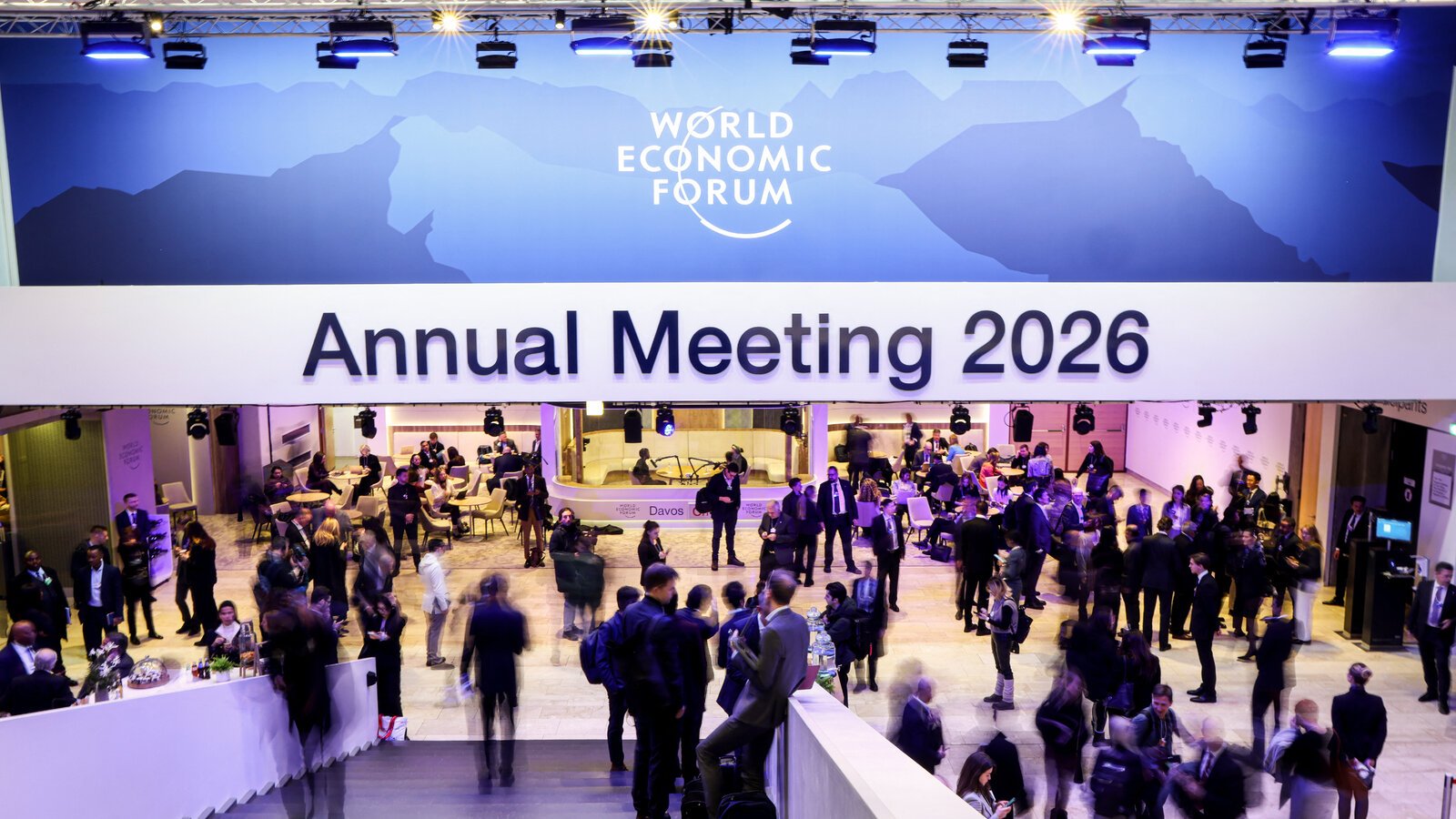
Every January, a small, snow-covered resort town in the Swiss Alps transforms into the most exclusive gathering on Earth. Private jets crowd the tarmacs of nearby airports, security cordons tighten around hotels, and the world’s most powerful figures descend upon Davos for the World Economic Forum (WEF).
For decades, this annual pilgrimage has been viewed as the epicenter of globalization—a place where heads of state, billionaires, and corporate titans mingle to shape the global agenda. But in recent years, the relevance of Davos has been called into question. Critics argue it is an out-of-touch echo chamber, while supporters insist it remains the only venue capable of fostering true public-private cooperation.
In 2026, against a backdrop of persistent global instability, fractured geopolitical alliances, and rapid technological shifts, the question remains: does Davos still matter? The answer lies not just in who attends, but in how the conversations happening behind closed doors continue to ripple outward, influencing policy, markets, and the future of governance.
What Is Davos and Why Was It Created?
To understand the forum’s enduring influence, we have to look back at its origins. Founded in 1971 by Klaus Schwab, a German engineer and economist, the event was originally named the “European Management Symposium.” Its initial goal was modest: to introduce European firms to American management practices.
Over time, however, the scope expanded dramatically. It evolved from a business conference into a platform for resolving international conflict and coordinating global economic strategy. It was at Davos in 1988 that Greece and Turkey signed the “Davos Declaration,” preventing war. It was there, too, that Nelson Mandela and F.W. de Klerk made their first joint appearance outside South Africa in 1992.
Today, the forum operates on the “stakeholder theory”—the idea that an organization is accountable to all parts of society, not just shareholders. While this sounds noble in principle, the modern iteration of Davos is often criticized for prioritizing the interests of the corporate elite under the guise of “improving the state of the world.”
Who Holds Power at Davos in 2026?
The attendee list at Davos serves as a barometer for global power. In 2026, the power dynamics have shifted, yet the core players remain familiar. The corridors are filled with G7 leaders, heads of central banks, and the CEOs of multinational giants like BlackRock, Google, and JPMorgan Chase.
However, the nature of influence is changing. Multinational corporations now often hold as much sway as national governments. When a tech CEO speaks about AI regulation, or a finance titan discusses decarbonization, their words can move markets faster than a legislative bill.
Alongside them are “unelected global actors”—leaders of NGOs, think tanks, and international bodies like the IMF and the UN. While these figures lack formal legislative authority, they possess immense “soft power.” They frame the narratives that national leaders eventually adopt, creating a feedback loop between the snowy peaks of Switzerland and the parliaments of the world.
How Davos Shapes Global Policy Decisions
A common misconception is that Davos is where laws are passed. It is not a legislative body. Instead, it functions through informal diplomacy. The most consequential conversations often happen not on the main stage, but in private bilats (bilateral meetings) and exclusive nightcaps.
These interactions grease the wheels of global policy. When finance ministers and tech CEOs agree on a framework for digital trade or cybersecurity, they take those “understandings” back home. The policies aren’t written in Davos, but the consensus required to pass them is often forged there.
We see this clearly in areas like climate and security. The push for “net-zero” commitments gained critical momentum through WEF initiatives, creating peer pressure among major corporations to adopt sustainability targets long before national governments mandated them.
Davos and the Global Economy
Markets have always listened to Davos. It serves as a signaling mechanism for the global economy. When central bankers express concern over sticky inflation or a potential recession during a panel discussion, algorithms react instantly.
In 2026, with economic shifts defined by supply chain re-shoring and energy transitions, these signals are vital. The forum acts as a confidence builder (or destroyer). If the consensus among the elite is that a specific region is “uninvestable” or a particular technology is the “next frontier,” capital flows follow that narrative.
Technology, AI, and the Future of Governance
Perhaps no topic dominates the 2026 agenda quite like Artificial Intelligence. As AI becomes deeply integrated into infrastructure and governance, the WEF has positioned itself as a primary architect of AI ethics and regulation.
Debates regarding digital identity, surveillance, and data governance are central to the forum’s recent work. This has sparked intense concern among privacy advocates who fear a drift toward technocratic control—where unelected experts determine the boundaries of digital freedom rather than democratic representatives.
Climate Change, ESG, and Sustainability Politics
For years, Davos has been the launchpad for Environmental, Social, and Governance (ESG) criteria. Major asset managers have used the platform to announce that they will shift investment strategies based on climate risk.
However, by 2026, this agenda faces stronger headwinds. While the forum continues to push for global compliance on sustainability, there is a growing divide. Supporters argue that without the WEF’s coordination, the private sector would never have mobilized on climate change. Critics, conversely, view the “Davos manifesto” on climate as hypocritical—pointing to the fleet of private jets used to attend the conference—and argue that it forces top-down regulations that hurt smaller economies.
Why Davos Faces Growing Criticism
The “Davos Man”—a term coined by political scientist Samuel Huntington to describe an elite with little loyalty to national borders—has become a caricature for everything wrong with globalization.
The criticism stems from a perceived lack of democratic accountability. Why should a billionaire from Silicon Valley have equal footing with an elected head of state? As inequality widens and the cost of living bites, the optics of the ultra-wealthy discussing “shared sacrifice” fuel public backlash. Protests outside the security perimeter are now a standard feature of the event, representing a deepening trust deficit between the elites and the citizenry.
Davos vs Democratic Institutions
This leads to the most pressing tension: does Davos undermine national sovereignty?
Skeptics argue that the WEF facilitates “policy laundering,” where unpopular policies are workshopped globally and then presented to national electorates as inevitable international standards. This creates friction between global coordination and local democracy. While global problems like pandemics and climate change require cross-border cooperation, citizens are increasingly wary of decisions made in forums where they have no vote and no voice.
Does Davos Still Matter to the World in 2026?
Despite the noise, the criticism, and the cynicism, leaders still show up. Why?
Because there is no alternative. The G7 and G20 are hampered by bureaucratic protocol and diplomatic standoffs. The UN is often paralyzed by Security Council vetoes. Davos remains one of the few places where rivals can speak informally, where a CEO can confront a Prime Minister, and where the “global brain” attempts to synchronize.
It matters because power seeks proximity to power. As long as the people who control the world’s capital, armies, and technology continue to meet in the Alps, the rest of the world cannot afford to ignore what happens there. Davos may not rule the world, but it is certainly where the rulers compare notes.
Frequently Asked Questions (FAQs)
What decisions are actually made at Davos?
The WEF does not have the power to make binding decisions or laws. It is a forum for dialogue. However, agreements made there often lead to partnerships or initiatives that influence national laws and corporate strategies later on.
Is the World Economic Forum a governing body?
No. It is an international non-governmental organization (NGO). It has no legal authority over any country or citizen.
Why do billionaires and CEOs attend Davos?
They attend to network, strike business deals, influence regulatory agendas, and gain insight into future economic trends that might affect their industries.
Can Davos influence national governments?
Yes, through “soft power.” Ideas popularized at Davos often filter down into national policy through lobbying, public-private partnerships, and the adoption of global standards (like ESG).
Is Davos losing relevance in 2026?
While it faces more criticism than ever, the high-level attendance suggests it remains highly relevant. However, the rise of a multipolar world means it is no longer the only center of gravity for global decision-making.
A Crossroads for Cooperation
In 2026, Davos stands at a crossroads. It remains a unique ecosystem of influence, unmatched in its ability to convene the movers and shakers of the planet. Yet, its future legitimacy depends on whether it can prove that it serves the global public, rather than just the global elite.
As power dynamics shift and technology reshapes our societies, understanding the mechanisms of the World Economic Forum is more important than ever. The decisions discussed in those conference rooms eventually find their way to our doorsteps.
Want to stay ahead of the trends shaping the global economy? Subscribe to our newsletter for deep dives into policy, tech, and finance delivered straight to your inbox.
Leave a Reply